


Stay in the know
Receive timely insights and briefings from HSF Kramer, tailored to keep you informed and ahead
Subscribe now
Iain Rothnie
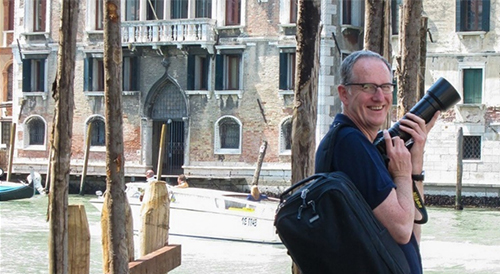
Alumnus Iain Rothnie's travel blog: https://thirdagevoyager.com/
About the artist
I am one half of a well-travelled couple who, since drawing back from full time work, have continued to travel to many parts of the world. We are ‘slow’ travellers, taking our time and allowing ourselves to absorb a little of the atmosphere, the character of a place as well as its cultural and historic offerings. As we move through our sixties, in our travels we also need to take account of certain constraints on our mobility.The writings in this blog take a measured, partial, and discursive view of those travels, sharing places we have enjoyed.
They also seek to share thoughts about the physical limitations we have to manage and information on how we deal with them. There are many excellent websites for disabled people and people with impairments which mean they cannot travel without mobility aids but there are also many who, like us, have what I call mobility constraints. This means we have to think about issues of distance to be covered and ease of access because of limitations on our ability to stand, walk and climb. For more detail about how this will be approached in pieces about individual travel destinations see the section on Mobility Constraints.
The travels are also a catalyst for my photography. So, part of this website is devoted to photographic essays that emerge from those travels.
-cropped.jpg)
Anna Sulan Masing
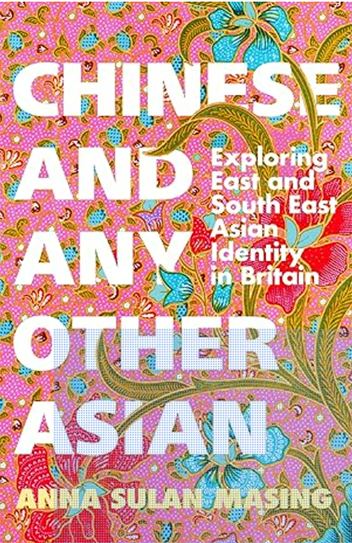
'Chinese' or 'Any other Asian'. The boxes that people of vastly varied East and South East Asian heritage have to tick when declaring their ethnicity on many forms in the UK.
This represents a shameful sweeping together of a diverse heritage and experience. East and South East Asian people have lived and worked in the UK for centuries, fought for the British Army in both world wars, have influenced British culture through food, writing, music and art in a multitude of ways. And yet this influence is often overlooked.
People of ESEA heritage experience unique forms of racism. Asian food is mocked as unhealthy and Asian restaurants as dirty. ESEA women are exoticised and sexualised, and assumed to be the nanny of their mixed-race children.
Anna Sulan Masing addresses these issues in a comprehensive way. She explores what it means to be East and South East Asian in Britain today, and celebrates the varied experiences that make up ESEA identity. Powerful, moving and illuminating, this will be a must-read for anyone interested in the make-up of our multicultural society.
About the author
Alumna Dr Anna Sulan Masing is a writer, poet & academic based in London. She is the co-founder and EIC of Sourced, a public research project, and of Cheese: The Magazine of Culture. Anna is one half of podcast Voices At The Table and co-founder of communications agency A+F Creative.
Emily Tsokos Purtill
A woman in my village gave me four prophecies...they have all come true, so far.
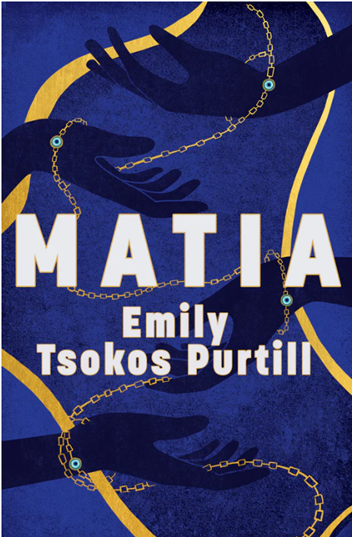
Sia is a young Greek woman who has emigrated from Greece to Perth, Western Australia in 1945 for a better life. She carries with her four prophecies and four pieces of protective jewellery, matia, one for herself, her daughter, granddaughter, and great-granddaughter. With a dooming prophecy hanging over each woman’s head will their lives unfold as they want or are they chained to the fate that’s been destined for them?
Over four generations and three continents, linking back and forth over 125 years from Greece to Perth to New York and back to Greece, Emily Tsokos Purtill has weaved a story that is utterly captivating and deeply moving.
About the author
Alumna Emily Tsokos Purtill is a Western Australian writer of Greek heritage living in Perth/Boorloo. She has also lived in the UK, Vancouver, Paris, and New York.
Emily worked as a lawyer in Perth and in Paris. She has short fiction published in Westerly and Griffith Review and was recently announced as a winner of the 2024 Griffith Review Emerging Voices competition. Matia is Emily’s debut novel.
David Dyer
The whole world has just watched Neil and Buzz walk on the Moon. Now they are struck by terror: the lunar module’s engine has failed. There is no back-up, no other way off the surface. If the astronauts can't fix the problem, they'll slowly run out of oxygen and die.
This Kingdom of Dust explores this harrowing scenario through the intertwined narratives of three distinct voices: Buzz on the Moon, his wife Joan back on Earth, and Aquarius, the journalist compelled to craft a story he doesn’t want to write.
Marooned, Buzz confronts his fate with a mix of dread and awe. On Earth, Joan wrestles with grief and sacrifice against the backdrop of 1960s America – a nation riven by war and seismic social change.
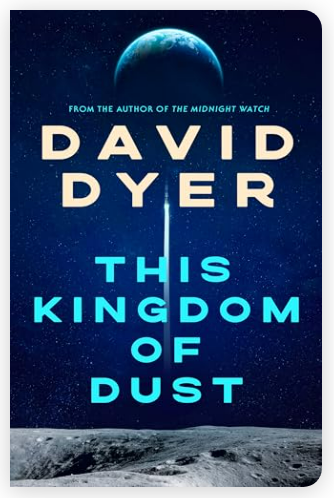
Caught between professional duty and personal turmoil, Aquarius soon discovers that he will need all his skill to capture this unfolding drama, and all his courage to follow it through to its breathtaking conclusion.
With page-turning suspense and emotional heft, this reimagining of an epic moment in history combines public spectacle with private despair, reframing what the Moon landing has meant not only for the astronauts and those who loved them, but for all humankind.
About the author
Alumnus David Dyer grew in a small, coastal town in New South Wales, Australia. After school, he pursued an eclectic career that included studying medicine, travelling the world in merchant ships, and working as a lawyer in Sydney and London.
He was a solicitor for several years at the London legal practice whose parent firm represented the Titanic’s owners in 1912. Upon his return to Australia, he decided to embrace his lifelong love of literature, and so became an English teacher and writer, and in 2013 was awarded a doctorate in creative arts. In 2016, he published The Midnight Watch, a novel about the ship that witnessed the Titanic’s distress rockets but failed to respond. He then turned his attention to space, and in 2019 was lucky enough to meet moonwalkers Buzz Aldrin and Charlie Duke, who inspired him with their vision, daring and courage. His second novel, This Kingdom of Dust, explores what would have happened had Buzz Aldrin and Neil Armstrong become stranded on the Moon during the Apollo 11 mission. David currently lives in Sydney, where he teaches, writes and makes cocktails.
Esther Lim Palme
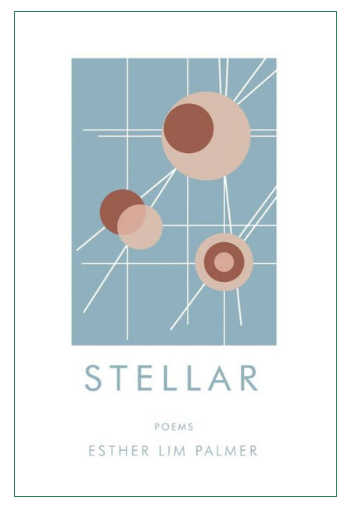
The title of Esther Lim Palmer's second chapbook, Stellar, is a fitting one, as these poems call out brightly from the darkness that surrounds us and guide us like navigational stars. In a voice that is always urgent and intimate, Palmer writes beautifully of longing and mystery, be it the longing for migratory birds to return to a beloved body of water, or the mystery of our relationship to our own childhoods. In this disorienting time, it is so wonderful to read a poet who helps us understand better where we stand. Palmer never shies away from the truth, but nor does she leave us alone. "Yes," she writes, "there is sand here. But water too." It is in this nexus, between challenge and consolation, that the poems in Stellar do their vital work. - Austin Smith
About the author
Alumna Esther Lim Palmer was born in Sydney, Australia. To fulfil her South Korean immigrant father's wishes, she studied law at the University of Sydney, and practiced in Big Law for over a decade in Sydney, Hong Kong, and California. She is the author of the chapbook Janus (Finishing Line Press, 2020), and her work has appeared in various literary journals and anthologies. She currently lives and writes in San Francisco.
Andy Stanton
AI is changing the world at frightening speed. A bestselling author decides to find out more...
Is ChatGPT the end of creative industries as we know them? An ethical quagmire from which there is no return? A threat to all our jobs, as we keep hearing on the news?
Bestselling children's author Andy Stanton has made a career out of writing differently - from the unconventional 'hero' of his bestselling Mr Gum series to his penchant for absurdist plots, his children's books are anything but formulaic.
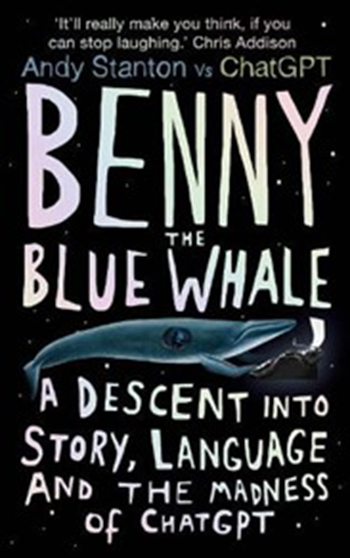
When a friend introduces him to ChatGPT, the new large language chatbot, Andy is as sceptical as he is curious. Can this jumble of algorithms really mimic the spontaneity of human thought? Could it one day replace human authors like him for good? And are we soon to be ruled over by despotic robot overlords?
He decides there's only one thing for it - he must test this bot's capabilities. Eventually, he settles on a prompt that will push the algorithm to its creative limits: 'tell me a story about a blue whale with a tiny penis.'
Chaos ensues.
What follows is a surprising and illuminating battle between Andy and ChatGPT that maybe, just maybe, might help us all understand AI a little bit better. Join Andy and his beleaguered AI lackey on a rollicking metafictional journey through the art of storytelling. Presenting his prompts and the AI-generated narrative alongside extensive commentary, Stanton provides a startling paean to the art of a good story and boundless human creativity. Hopeful and hilarious, Benny the Blue Whale provides a joyfully anarchic meditation on AI, literature and why we write.
About the author
Andy Stanton lives in North London. He studied English at Oxford, but they kicked him out. He has been a stand-up comedian, a film script reader, a cartoonist, an NHS lackey, and lots of other things. You’re a Bad Man, Mr Gum! was his first book and is the first in the eight-part Mr Gum series. He also wrote the lyrics and book for Mr Gum and the Dancing Bear – The Musical!, which premiered at the National Theatre in July 2019.
Winner of the Booker Prize 2024
Samantha Harvey
Life on our planet as you've never seen it before.
A team of astronauts in the International Space Station collect meteorological data, conduct scientific experiments and test the limits of the human body. But mostly they observe. Together they watch their silent blue planet, circling it sixteen times, spinning past continents and cycling through seasons, taking in glaciers and deserts, the peaks of mountains and the swells of oceans. Endless shows of spectacular beauty witnessed in a single day.
Yet although separated from the world they cannot escape its constant pull.
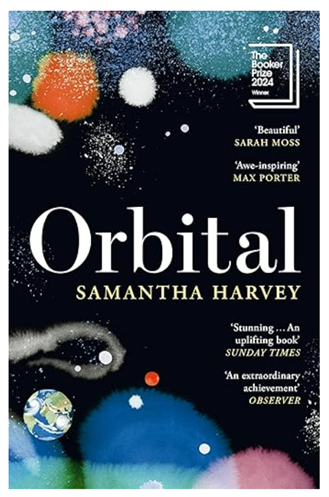
News reaches them of the death of a mother, and with it comes thoughts of returning home. They look on as a typhoon gathers over an island and people they love, in awe of its magnificence and fearful of its destruction.
The fragility of human life fills their conversations, their fears, their dreams. So far from earth, they have never felt more part - or protective - of it. They begin to ask, what is life without earth? What is earth without humanity?
About the author
Samantha Harvey grew up in Kent near Maidstone. After studying philosophy at the University of York and the University of Sheffield, she went on to complete a master’s degree and a PhD in creative writing at Bath Spa University, where she now works as a Reader in Creative Writing. Her short fiction has appeared in Granta and on BBC Radio 4, and she has written reviews, essays and articles for the New Yorker, the Guardian, TIME, and the New York Times, among other publications.
In 2009, Harvey published her debut novel The Wilderness, which is told from the point of view of a man in the early stages of Alzheimer’s. It was followed by All Is Song (2012); Dear Thief (2015) which was shortlisted for the James Tait Black Memorial Prize; and The Western Wind (2018), which won the Staunch Prize 2019 and was nominated for the Walter Scott Prize in the same year. In 2020, Harvey published Shapeless Unease, a memoir about her year of suffering from intense insomnia, which doubles as a startlingly insightful meditation on memory, reality, grief and writing.
David McWilliams
'Money. The object of our desires. The engine of our genius. Humanity’s greatest invention.'
Whether we like it or not, our world revolves around money, but we rarely stop to think about it. What is money, where does it come from, and can it run out? What is this substance that drives trade, revolutions, and discoveries; inspires art, philosophy and science?
In this illuminating, sometimes irreverent, and often surprising journey, economist David McWilliams charts the relationship between humans and money – from a tally stick in ancient Africa to coins in
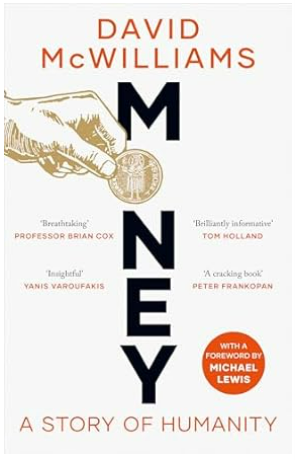
Republican Greece, from mathematics in the medieval Arab world to the French Revolution, and from the emergence of the US dollar right up to today’s cryptocurrency and beyond. Along the way, we meet a host of characters who have innovated with money, disrupting society, and changing the way we live, in an ongoing monetary evolution that has, for the last 5000 years, animated human progress.
McWilliams unlocks the mysteries and power of money, explaining why it matters and how it shapes our world.
About the author
David McWilliams is a global economist, writer, and broadcaster whose unique ability to communicate complex societal and economic structures is unparalleled. Having worked at the Central Bank of Ireland, he became a faculty member at Trinity College, Dublin business school. He's been described as being to economics what David Attenborough is to the natural sciences and Brian Cox is to physics.
Elif Shafak
This is the story of one lost poem, two great rivers, and three remarkable lives – all connected by a single drop of water.
In the ruins of Nineveh, that ancient city of Mesopotamia, there lies hidden in the sand fragments of a long-forgotten poem, the Epic of Gilgamesh.
In Victorian London, an extraordinary child is born at the edge of the dirt-black Thames. When his brilliant memory earns him a spot as an apprentice at a printing press, the world opens up far beyond the slums and across the seas.
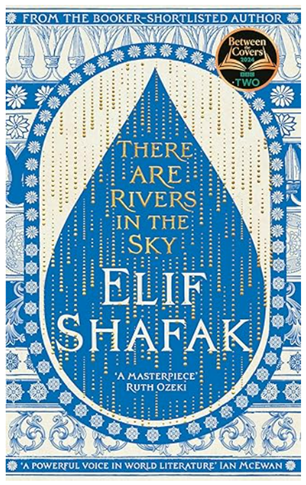
In 2014 Turkey, Narin, a Yazidi girl living by the River Tigris, waits to be baptised. The ceremony is cruelly interrupted, and soon she and her grandmother must journey across war-torn lands in the hope of reaching the sacred valley of their people.
In 2018 London, broken-hearted Zaleekhah, a hydrologist, moves to a houseboat on the Thames to escape the wreckage of her marriage – until an unexpected connection to her homeland changes everything.
A dazzling feat of storytelling from one of the greatest writers of our time that spans centuries, continents and cultures, entwined by rivers, rains, and waterdrops.
About the author
Elif Shafak is an award-winning British Turkish novelist whose work has been translated into fifty-five languages. The author of nineteen books, twelve of which are novels, she is a bestselling author in many countries around the world. Shafak's novel, The Island of Missing Trees, was a top ten Sunday Times bestseller, a Reese Witherspoon Book Club pick and was shortlisted for the Costa Novel Award and the Women's Prize. Her previous novel 10 Minutes 38 Seconds in this Strange World was shortlisted for the Booker Prize and the RSL Ondaatje Prize; longlisted for the Dublin Literary Award; and chosen as Blackwell's Book of the Year. She is a Vice-President of the Royal Society of Literature. Shafak was awarded the Halldór Laxness International Literature Prize for her contribution to 'the renewal of the art of storytelling.'

Senior Alumni Executive, London

Alumni Executive, London
The contents of this publication are for reference purposes only and may not be current as at the date of accessing this publication. They do not constitute legal advice and should not be relied upon as such. Specific legal advice about your specific circumstances should always be sought separately before taking any action based on this publication.
© Herbert Smith Freehills Kramer 2026
Receive timely insights and briefings from HSF Kramer, tailored to keep you informed and ahead