

On 6 March 2026, Ofgem published its decision on its second consultation on the implementation of energy code reform, which set out proposals to modernise Great Britain’s regulatory energy codes. Phase 1 of the reform is expected to be implemented by the end of 2026.
Central to energy code reform are Ofgem's new powers under the Energy Act 2023 (EA 2023) to appoint and license code managers. Code managers will assume roles previously fulfilled by code panels and administrators, ensuring that industry codes evolve in line with Ofgem’s annually published Strategic Direction Statement (SDS). The additional introduction of new Stakeholder Advisory Forums (SAF) will allow industry stakeholders to more actively contribute to the decision-making process.
Ofgem's recent decision is part of a broader joint programme of reform by Ofgem and government. Collectively, these measures aim to create a more streamlined approach, that better aligns governance with the evolving energy sector's dynamic needs and consolidates the current codes to ensure easier market participant compliance.
Transition to new governance framework

Milestones across all three phases include:
- appointing code managers;
- preparing the code manager standard licence conditions and baseline code text to be used;
- making specific code, licence and contract modifications needed to transition the codes in line with SDSs (yet to be published);
- reviewing dependencies across related programmes; and
- (for Phase 2 and 3 only) consolidating governance and contractual provisions across the ECC, GNC and ETC.
In Phase 1, the BSC and REC will not be consolidated. Ofgem proposes for Elexon Limited and Retail Energy Code Company Limited to become the code managers for the BSC and REC respectively following its March 2025 decisions to follow a non-competitive selection process for such code managers.
As decided in its 2024 consultation decision, Ofgem will pursue code consolidation to establish the ECC and GNC (both in Phase 2) and the ETC (in Phase 3). Detailed plans for Phase 2 and Phase 3 will be shared later, in line with future SDSs to be published. Ofgem will use lessons learned from Phase 1 to shape the sequencing and delivery of Phases 2 and 3, ensuring the transition remains aligned with wider reform objectives. The initial code consolidations led by Ofgem are expected to be limited in scope, with further changes to rationalise and simplify the codes led by code managers in the longer-term.
Ofgem has informed stakeholders that, to achieve consolidation, it will work closely with industry stakeholders to run code consolidation workgroups (CCWs) to gather views and identify risks, then draft code changes, consult on them and potentially refine them further before implementation (expressions of interests to join the CCWs, and Ofgem's consultation on the code modification text, are invited until 17 April 2026). Such workgroups are to begin in Summer 2026.
Future code modification process
Stakeholder Advisory Forum (SAF)
Stakeholders have reacted positively to Ofgem's proposal of SAFs acting as an accountability mechanism within the reformed code governance framework. SAFs are designed to scrutinise code managers’ decisions while ensuring alignment with consumer outcomes and Ofgem’s SDS.
Cost recovery
Ofgem has confirmed it will retain the existing cost recovery methodologies for the BSC and REC, as they are transparent and non-disruptive to competition.
Regarding cost recovery methodologies for the other codes, Ofgem have confirmed that they are reviewing cost recovery methodologies on a code-by-code basis. Initial Ofgem proposals can be viewed in the Final Impact Assessment from August 2024.
Directing central system delivery bodies
The EA 2023 gives Ofgem statutory powers to issue directions to the bodies responsible for operating central system delivery bodies (CSDBs). CSDBs will play a key role in supporting the implementation of code changes, including by delivering required changes to central systems and coordinating those changes with wider system developments.
Ofgem’s direction powers are intended to ensure that CSDBs will act in support of effective code governance and market operation. Ofgem's decision sets out its process for issuing such directions.
Next steps
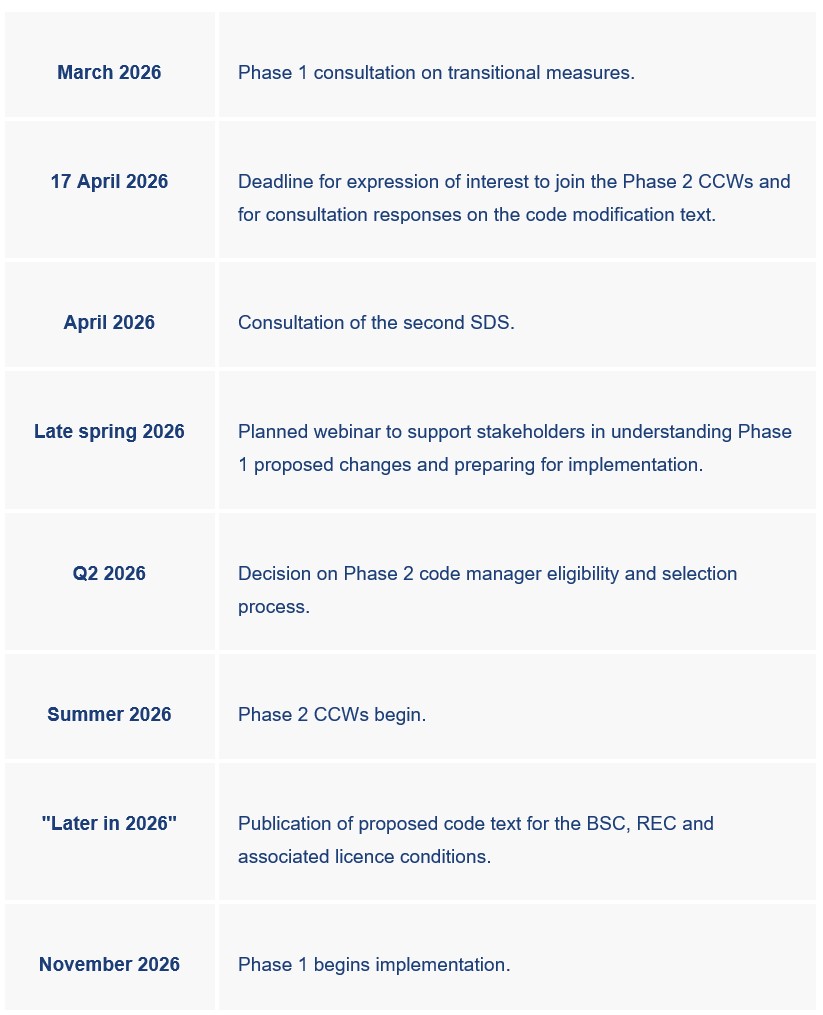
The proposed changes mark a significant shift in the rules governing Great Britain's gas and electricity industries. Industry participants should benefit from faster, more consistent and streamlined processes but will need to evaluate the implications of the new codes as code reform continues to progress, including the actions they need to take to prepare for implementation and ensuring that they understand the new role of the code manager and the ways in which stakeholders can input into the new governance arrangements.
Please do not hesitate to contact us if you would like to discuss the proposed reforms and their potential impacts.
This article was prepared with the assistance of trainee Jonny Fox.
Key contacts

Dr Silke Goldberg
Partner, London and Israel Group

Sarah Pollock
Partner, Head of Energy Sector, London

Kate Laidlow-Singh
Of Counsel, London
Disclaimer
The articles published on this website, current at the dates of publication set out above, are for reference purposes only. They do not constitute legal advice and should not be relied upon as such. Specific legal advice about your specific circumstances should always be sought separately before taking any action.