

We provide legal assistance and legal empowerment to refugees and displaced persons, as well as Refugee Led Organisations and NGOs working in this space.
HSF Kramer is a proud signatory to the Global Refugee Forum's Legal Community Pledge 2023 (the Pledge) and part of the Core Group responsible for the coordination, sustainability, and monitoring of the implementation of the Pledge. Our Pro Bono Counsel, Lara Nassif, was invited to help launch the pledge at UNHCR's Global Refugee Forum in Geneva.
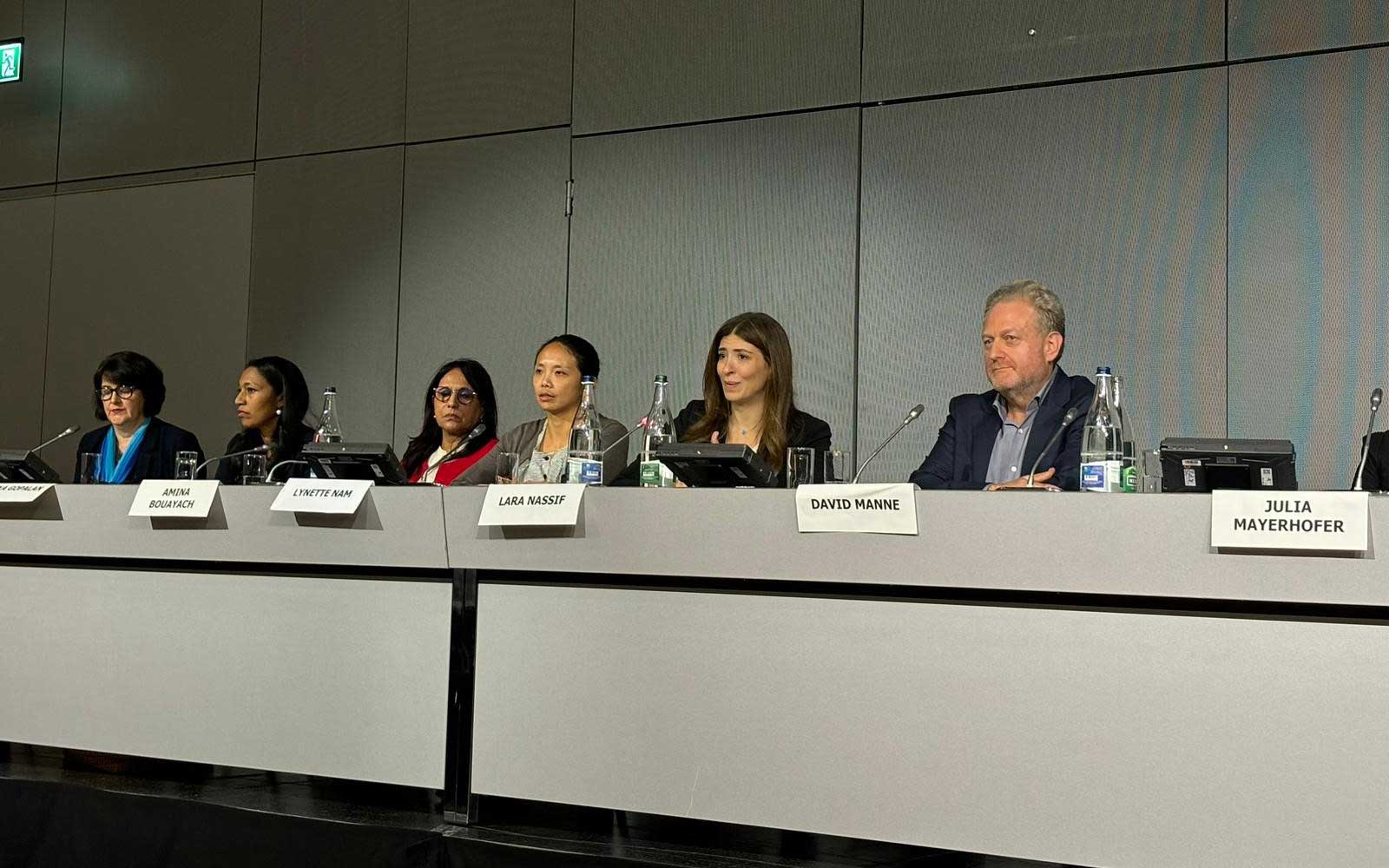
Pro Bono Counsel, Lara Nassif (second from right) speaking at the launch event
APAC
HSF Kramer lawyers have supported the work of RACS through various pro bono clinics including:
- providing assistance with applications for protection visas, humanitarian visas and Resolution of Status visas; and
- drafting statements setting out applicants’ protection claims.
Since 2023, our work with RACS has focused on supporting RACS clients to reunite with their loved ones under the Family Reunion program
We are also proud to be partnering with RACS to support people applying for protection visas who fear persecution in their home country based on their sexual orientation, gender identity, gender expression, and/or sex characteristics. This statement-taking pro bono clinic seeks to address the barriers that many LGBTQI+ individuals face during the asylum process in Australia.
“… it’s impossible to really convey our gratitude for the applications prepared by Herbert Smith Freehills Kramer… Thank you all for your diligence, empathy, and patience in carrying out this work…”
Refugee Advice & Casework Service
The Refugee and Immigration Legal Service (RAILS) is a community legal centre which provides free legal advice to immigrants, refugees and asylum seekers in Queensland. HSF Kramer lawyers have assisted RAILS on various pro bono clinics, including:
- the Unrepresented Asylum Seekers Project which assisted people on temporary protection visas, to secure permanent visas to remain in Australia; and
- the Family Reunion Clinic which provides support to people seeking to sponsor family members (overseas) to apply for child or partner visas in Australia.
Lawyers across our Asian offices have undertaken research projects for refugee-focused NGOs and the UNHCR on a diverse range of issues, such as:
- risk profiles and resources to inform the Country of Origin (COI) Resource Library maintained by Justice Centre Hong Kong (JCHK), a not-for-profit which supports refugees, asylum seekers and other forced migrants in Hong Kong SAR;
- the extent of digital and financial inclusion for refugees across Asia including in India, Indonesia, Papua New Guinea and Malaysia;
- banking solutions and social enterprise models which are available to refugees in Malaysia and Indonesia;
- the illegal deployment of migrant workers in Singapore and potential causes of action; and
- comparative law research on false imprisonment of domestic workers.
We are proud to support Justice Without Borders (JWB) with casework and education to improve access to justice for migrant workers. For example, we and our colleagues at Hiswara Bunjamin & Tandjung:
- regularly partner with JWB on capacity building initiatives including:
- delivering a workshop on anti-discrimination laws and protection for migrant domestic workers in Hong Kong;
- developing materials and hosting sessions on Mediation and Negotiation as part of JWB’s ‘Training of Trainers’ program in Indonesia; and
- providing migrant workers in Singapore with training on their legal rights, remedies and how to collect and preserve evidence of exploitation;
- co-authoring a handbook with JWB entitled Just Compensation: A Toolkit for Cross-Border Access to Justice for Migrant Domestic Workers in Hong Kong;
- up-skilling community-based caseworkers about the legal framework for migrant worker protection, and equipping them with essential skills to support JWB’s clients;
- provided legal support to an Indonesian worker in her sexual harassment claim against her employer and advice on potential overcharging by loan agencies;
- worked with JWB to assist an Indonesian worker who was falsely accused of theft by her former employers in Singapore who then withheld part of her salary; and
- supporting JWB’s knowledge management efforts by reviewing and providing insights on lessons learned in mediation and negotiation.

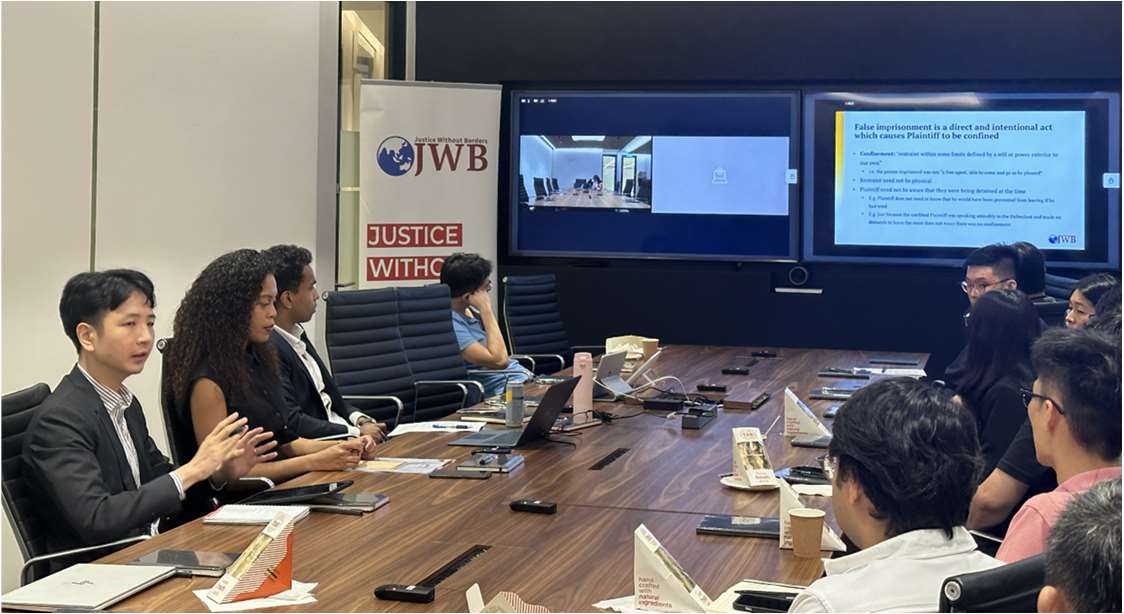

HSF Kramer and HBT team members participating in various JWB capacity building initiatives across the region.
UK & EMEA
Our Johannesburg office has set up a Refugee Law Clinic in collaboration with the UN High Commissioner for Refugees, Lawyers for Human Rights and the Nelson Mandela University Refugee Rights Centre. The clinic aims to help refugees apply for certification of refugee status or citizenship in South Africa by naturalisation.
Lawyers assisting with this project have received training and supervision provided by UNHCR and its legal partners. They work in teams and engage the refugees directly to advise them on their applications for both certified status and, if that is successful, permanent residence.
Alongside the Italian Coalition for Civil Liberties and Rights (CILD) and global law firm, Orrick, lawyers from our Milan office have been providing pro bono legal advice to marginalised individuals who are seeking to maintain or regain family unification.
Our Milan office has worked on a number of cases, with a majority having positive outcomes. We also advised CILD in its efforts to bring a class action against the relevant authorities relating to family reunification. CILD was contesting the length of the process for obtaining Italian permits, which should only take around 90 days but often takes over one year. Such delays can mean that families, often with minors involved, are kept apart unnecessarily.
In collaboration with Spanish NGO Accem, and three other international law firms, our Madrid office participates in the Safe Pathways to Spain initiative. Our volunteers help Accem with drafting applications for Afghan individuals and their family members based in Afghanistan or third countries who meet the criteria for resettlement in Spain through family reunification or humanitarian visas.
To launch the project, Dorothy Estrada-Tanck, Chair of the UN Working Group for Discrimination Against Women & Girls, came to speak to our lawyers about the widespread and systematic discrimination to which women and girls in Afghanistan are subjected, (particularly since the fall of the Islamic Republic of Afghanistan on 15 August 2021) and the resilience and strength of Afghan women in the face of such repression.
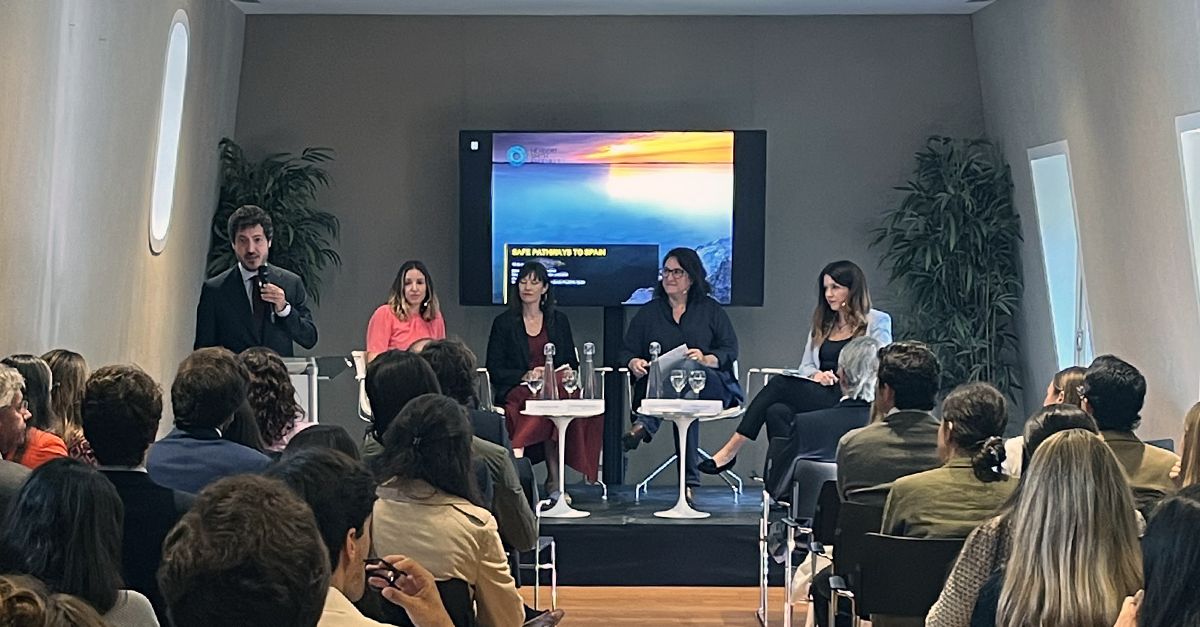
Eduardo Soler Tappa (Head of the Madrid Office), Maria Judith Garcia Padilla (Accem), Dorothy Estrada Tanck (Chair of the UN Working Group for Discrimination Against Women & Girls), Magdalena Queipo de Llano (Accem) and Esther Lumbreras (Of Counsel, Madrid Office))
Changes in migration flows in Europe, including those due to the crises in Ukraine and Afghanistan more recently, have led to the increased frequency of violations of the human rights of asylum-seekers, refugees and migrants. The Rule 39 Pro Bono Initiative was founded in 2021 in response to these changes. Operating under the auspices of Pro Iura since 2024, the initiative is supported by nine international law firms, including HSF Kramer, and has been overseen by human rights lawyer Dr Daria Sartori since its inception, with the support of Muriel Vicquéry and Lyda Mastrantonio. Since the Rule 39 Initiative launched, it has been steadily securing life-altering support to displaced persons across Europe.
The project derives its name from Rule 39 of the Rules of the European Court of Human Rights (ECtHR), a provision allowing applicants to seek interim relief in case of imminent risk of irreparable damage to human rights. Rule 39 requests are typically used by NGOs to:
- Stop collective pushbacks of asylum seekers
- Prevent expulsion or extraditions of vulnerable individuals to countries where their human rights are at risk
- Ensure the provision of dignified reception conditions
- Ensure the provision of life-sustaining food and water to refugees and asylum seekers stuck at, or between, borders.
Owing to the urgent relief that can be granted, Rule 39 can be used to stop active human rights abuses. The Rule 39 initiative’s initial focus was on assisting NGOs to use this form of relief more effectively. Faced with a wider need for assistance, however, the project now also supports individual applications under Article 34 of the European Convention of Human Rights.
A number of volunteers across our London and European offices are supporting the Rule 39 Initiative, working on research, drafting submissions and preparing evidence for the European Court of Human Rights, under the supervision of Dr Sartori.
Read more about the Rule 39 Initiative’s work here: How the Rule 39 Initiative saved the lives of migrants held on the edges of conflict in Ukraine ⁄ Open Migration
Lawyers in our London office volunteer for the Asylum Support Appeals Project's (ASAP) duty scheme.
ASAP aims to reduce destitution among asylum seekers by protecting their legal rights to food and shelter. It provides free legal advice and representation to asylum seekers at the First-tier Tribunal (Asylum Support), runs an advice line, advisers network and training for agencies and engages in policy work to improve asylum support law.
There is no public funding outside Scotland for legal representation in this area and ASAP is the only organisation providing this service to appellants from across the UK. Lawyers from law firms and chambers volunteer to help ASAP with representation at the Tribunal. Judgments are delivered at the hearings and so lawyers see the immediate impact of their work. Even if they do not win, asylum seekers are relieved to have had representation before the Tribunal, which is often daunting in the face of both a Home Office representative and a judge.
Our volunteers undertake extensive training, including shadowing current advocates and attending hearings at the Tribunal, to prepare for the challenges of running a case on their own within a short timeframe and ensure that they are delivering high-quality advice. Volunteers put together submissions; meet and brief appellants before and after the Tribunal; conduct the advocacy; draft letters of advice; and liaise with other teams involved in the person's case.
Our NGO advisory and social impact investment work supports the growth and resilience of women-led social enterprises and organisations supporting vulnerable women in the community, such as Routes Collective. Through the Routes Community, Routes Collective supports women with experience of seeking safety in the UK to grow in confidence, build relationships and access opportunities.
For example, associates in our London office provided the not-for-profit with crucial contract advisory support to help expand its mentoring services.