


Stay in the know
Receive timely insights and briefings from HSF Kramer, tailored to keep you informed and ahead
Subscribe now
Abigail Dean (alumna)
It’s the story everyone wants to hear.
That spring night in South London, when Isabel and Edward’s lives were torn apart.
The night Isabel learned that the worst things wait, just outside the door.
The night Edward learned that he was powerless to stop them.
The night they never talk about.
When their attacker is caught, it's finally time to tell the story of that night.
Not to the world. Or to the man who did it. But to each other.
This is a story of murder. This is a story of survival. But most of all, this is a story of love.

About the author
Alumna Abigail Dean was born in Manchester and grew up in the Peak District. Abigail has worked as a Waterstones bookseller and a lawyer. Her debut novel, Girl A, was a New York Times and Sunday Times top ten bestseller and a Kindle number 1 bestseller. The rights to Girl A have sold in 36 territories and a television series is being adapted with Sony.
Abigail lives in London with her husband, children, and cantankerous cat. She has always loved reading, writing, and talking about books. You can follow her on Instagram @AbigailSDean.
Ravi Tennekoon (alumnus)
The climate apocalypse predicted by today's scientists has finally come to pass. The Eurasian landmass has become one vast desert scorched by ferocious heat. Most of humanity has been obliterated by the ferocity of heat, rising oceans and storms of unimaginable force. All knowledge of today’s science and technology and of our civilisation has been lost.
Amanaar and Mayzaar, who live in the underground city of Kaimakla, discover that the oasis on which the city depends is drying up, and that they will all die soon from thirst and starvation. As a desperate measure, Amanaar organises a journey to cross the vast desert to their north in search of a safe haven.
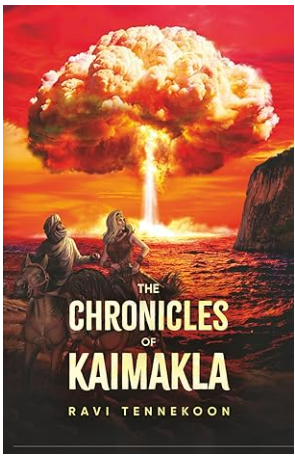
On their journey they face many terrors but also stumble upon objects from today’s world which are incomprehensible to them. They meet Stinna who passionately believes in the truth of the legends of great cities and a vanished hugely advanced technological civilisation. Stinna persuades the two men to join her in the search for the truth and for an explanation of what happened. This is their story.
About the author
Alumnus Ravi Tennekoon is passionately interested in the consequences of climate change. A lawyer and Professor at King’s College London, he was selected by the prestigious Chambers Directory as one of the leading lawyers in his field. He is the author of a major textbook, The Law and Regulation of International Finance. He was a lecturer and tutor in laws at Trinity College, Oxford, after reading law on a Rhodes Scholarship.
Zadie Smith
From acclaimed and bestselling novelist Zadie Smith, a kaleidoscopic work of historical fiction set against the legal trial that divided Victorian England, about who deserves to tell their story - and about who deserves to be believed.
It is 1873. Mrs Eliza Touchet is the Scottish housekeeper - and cousin by marriage - of a once famous novelist, now in decline, William Ainsworth, with whom she has lived for thirty years.
Mrs Touchet is a woman of many interests: literature, justice, abolitionism, class, her cousin, his wives, this life and the next. But she is also sceptical. She suspects her cousin of having no talent; his successful friend, Mr Charles Dickens, of being a bully and a moralist; and England of being a land of facades, in which nothing is quite what it seems.

Andrew Bogle meanwhile grew up enslaved on the Hope Plantation, Jamaica. He knows every lump of sugar comes at a human cost. That the rich deceive the poor. And that people are more easily manipulated than they realise. When Bogle finds himself in London, star witness in a celebrated case of imposture, he knows his future depends on telling the right story.
The 'Tichborne Trial' captivates Mrs Touchet and all of England. Is Sir Roger Tichborne really who he says he is? Or is he a fraud? Mrs Touchet is a woman of the world. Mr Bogle is no fool. But in a world of hypocrisy and self-deception, deciding what is real proves a complicated task...
Based on real historical events, The Fraud is a dazzling novel about truth and fiction, Jamaica and Britain, fraudulence and authenticity, and the mystery of 'other people.'
About the author
Zadie Smith is the author of the novels White Teeth, The Autograph Man, On Beauty, NW and Swing Time; as well as a novella, The Embassy of Cambodia; three collections of essays, Changing My Mind, Feel Free and Intimations; a collection of short stories, Grand Union; and the play, The Wife of Willesden, adapted from Chaucer. She is also the editor of The Book of Other People. Zadie Smith was born in north-west London, where she still lives. The Fraud is her first historical novel.
-cropped.jpg)
Daniel Mason
When a pair of young lovers abscond from a Puritan colony, little do they know that their humble cabin in the woods will become the home of an extraordinary succession of human and inhuman characters alike. An English soldier, destined for glory, abandons the battlefields of the New World to devote himself to apples. A pair of spinster twins navigate war and famine, envy and desire. A crime reporter unearths a mass grave - only to discover that the ancient trees refuse to give up their secrets. A lovelorn painter, a sinister conman, a stalking panther, a lusty beetle: as each inhabitant confronts the wonder and mystery around them, they begin to realize that the dark, raucous, beautiful past is very much alive.
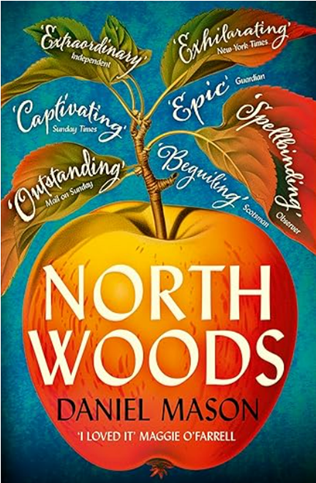
In his transcendent fourth novel, Pulitzer Prize finalist Daniel Mason delivers a magisterial and highly inventive tale brimming with love and madness, humour and hope. Following the cycles of history, nature and even language, North Woods shows the myriad, magical ways in which we're connected to our environment, to history and to each other. It is not just an unforgettable novel about buried secrets and inevitable fates, but a way of looking at the world.
About the author
Daniel Mason is a doctor and author of The Piano Tuner (2002), A Far Country (2007), The Winter Soldier (2018), and A Registry of My Passage Upon the Earth (2020), which was a finalist for the Pulitzer Prize. His work has been translated into 28 languages, adapted for opera and the stage, and awarded a Guggenheim Fellowship, the Joyce Carol Oates Prize, the California Book Award, the Northern California Book Award, and a Fellowship from the National Endowment for the Arts. His short stories and essays have been awarded two Pushcart Prizes, a National Magazine Award and an O. Henry Prize. He is an assistant professor in the Stanford University Department of Psychiatry. He currently lives in Palo Alto, CA.
William Dalrymple
India is the forgotten heart of the ancient world.
In the millennium and a half from c. 250 BC to 1200 AD, Indian art, religion, technology, astronomy, music, dance, literature, mathematics and mythology blazed a trail across the world - a Golden Road that stretched from the Red Sea to the Pacific.
Here, William Dalrymple draws from a lifetime of scholarship to highlight India's oft-forgotten position as the heart of ancient Eurasia. For the first time, he gives a name to this spread of Indian ideas that transformed the culture and technology of not only its ancient world, but of the world as we know it today.

About the author
William Dalrymple is one of Britain's great historians and the bestselling author of the Wolfson Prize-winning White Mughals, The Last Mughal, which won the Duff Cooper Prize, and the Hemingway and Kapuscinski Prize-winning Return of a King. A frequent broadcaster, he has written and presented three television series, one of which won the Grierson Award for Best Documentary Series at BAFTA.
He is a fellow of the Royal Society of Literature, the Royal Asiatic Society and the Royal Society of Edinburgh, and has held visiting fellowships at Princeton, Brown and All Souls, University of Oxford. He writes regularly for the New York Review of Books, the New Yorker and the Guardian.
In 2018 he was presented with the prestigious President's Medal by the British Academy for his outstanding literary achievement and for co-founding the Jaipur Literature Festival. He is the co-host of chart-topping podcast Empire with Anita Anand. William lives with his wife and three children on a goat farm outside Delhi.
Robert Macfarlane
At its heart is a single, transformative idea: that rivers are not mere matter for human use but living beings – who should be recognized as such in both imagination and law. Is a River Alive? takes the reader on an exhilarating exploration of the past, present and futures of this ancient, urgent concept.
The book flows first to northern Ecuador, where a miraculous cloud-forest and its rivers are threatened by goldmining.
Then, to the wounded rivers, creeks and lagoons of southern India, where a desperate battle to save the lives of these waterbodies is under way.
And finally, to north-eastern Quebec, where a spectacular wild river – the Mutehekau or Magpie – is being defended from death by damming in a river-rights campaign.
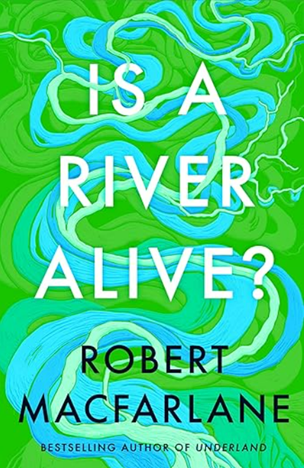
At once Macfarlane’s most personal and most political book to date, Is a River Alive? will open hearts, spark debates and lead us to the revelation that our fate flows with that of rivers – and always has
About the author:
Robert Macfarlane is internationally renowned for his writing on nature, people and place. His bestselling books include Underland, Landmarks, The Old Ways, The Wild Places and Mountains of the Mind, as well as a book-length prose-poem, Ness. His work has been translated into more than thirty languages, won prizes around the world, and been widely adapted for film, music, theatre, radio and dance. He has also written operas, plays, and films including River and Mountain, both narrated by Willem Dafoe.
In 2017, the American Academy of Arts and Letters awarded him the E.M. Forster Prize for Literature, and in 2022 in Toronto he was the inaugural winner of the Weston International Award for a body of work in the field of non-fiction. He is a Fellow of Emmanuel College, Cambridge, and is currently completing his third book with Jackie Morris: The Lost Birds.
Paul Cooper
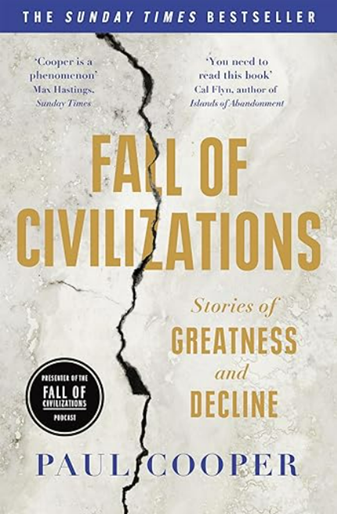
The world is full of ruins. From the Colosseum of Rome to the crumbling suburbs of Detroit, the vine-wreathed temples of the Maya to the shell-pocked buildings of Bakhmut and Gaza. Each of these ruins have a different history, but they share a single truth: they are all places where, one day, the future ended.
In Fall of Civilizations, historian Paul Cooper tells the stories behind our greatest civilizations, how they rose to power and what life was like for the people who witnessed their downfall. Based on the critically acclaimed podcast, this extraordinary book turns a clear eye on to humanity’s past mistakes – and whether we are doomed to repeat them.
About the author:
Paul Cooper is a podcaster, historian and the author of two acclaimed historical novels, River of Ink and All Our Broken Idols. He gained his PhD from the University of East Anglia and has taught there and at Warwick. He writes, produces and hosts the Fall of Civilizations podcast, which has charted in the top ten British podcasts, and since its launch in 2018 has garnered over 100 million downloads and over 1 million YouTube subscribers.

Senior Alumni Executive, London

Alumni Executive, London
The contents of this publication are for reference purposes only and may not be current as at the date of accessing this publication. They do not constitute legal advice and should not be relied upon as such. Specific legal advice about your specific circumstances should always be sought separately before taking any action based on this publication.
© Herbert Smith Freehills Kramer 2026
Receive timely insights and briefings from HSF Kramer, tailored to keep you informed and ahead