

As of January 2024 we have committed to set a new net zero target to reduce our absolute emissions by 90% by 2040, which aligns with the expectation of the SBTi Net Zero Guidance. This replaces our previous net zero target to reduce our emissions by 50% by 2030 and offset remaining residual emissions, which had been made in line with prior thinking regarding net zero commitments.
In 2021, we set near-term targets for 2030 which were validated by the internationally-respected Science Based Targets Initiative (SBTi).
Best practice and standards around target setting change to adapt to new scientific understanding of the emission reductions required and we believe re-positioning our targets to ensure we are aligned to the latest thinking is the right thing to do.
Our near-term target includes the following commitments:
- Reducing our overall emissions by 50% by moving to renewable energy; reducing emissions from business travel; and working with suppliers who are also committed to lowering their environmental impact.
- Matching our energy usage with renewable energy purchase.
- By 2025, actively engaging with our suppliers and ensuring that 55% of our suppliers by spend have science-based targets for reducing their emissions.
- Improving our transparency via reporting through the voluntary disclosure platform of CDP, a leading charity promoting environmental reporting.
Our progress so far and next steps
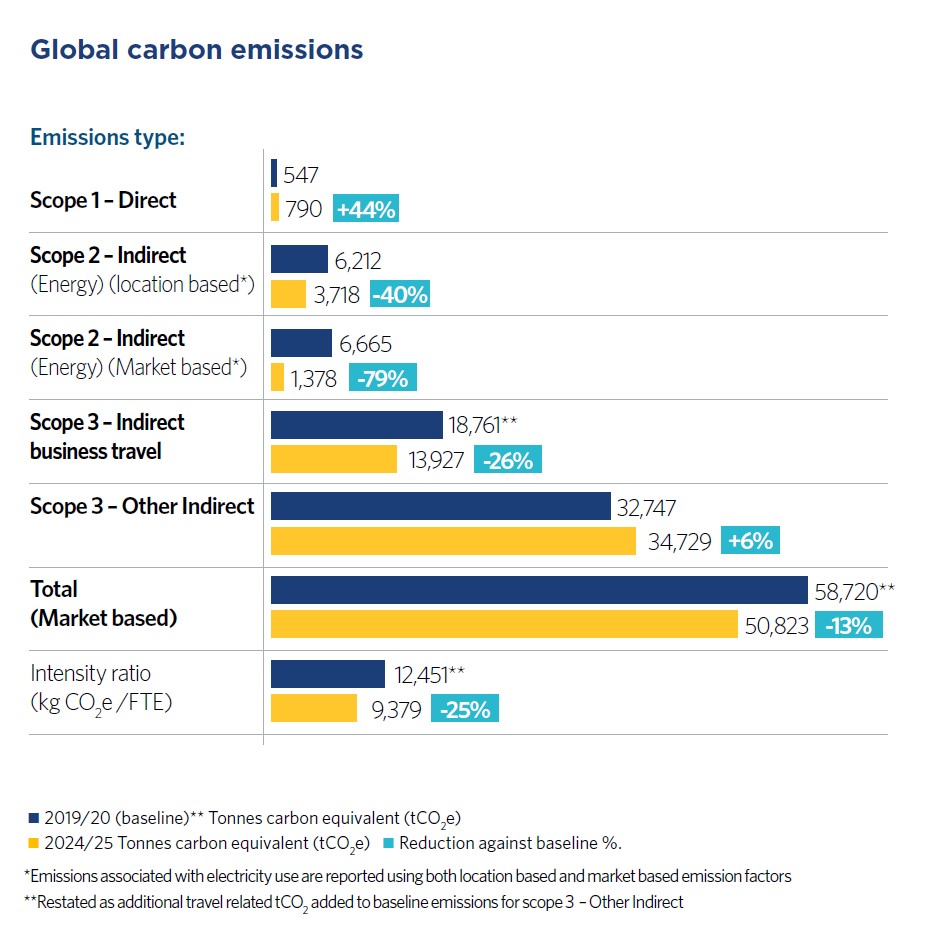
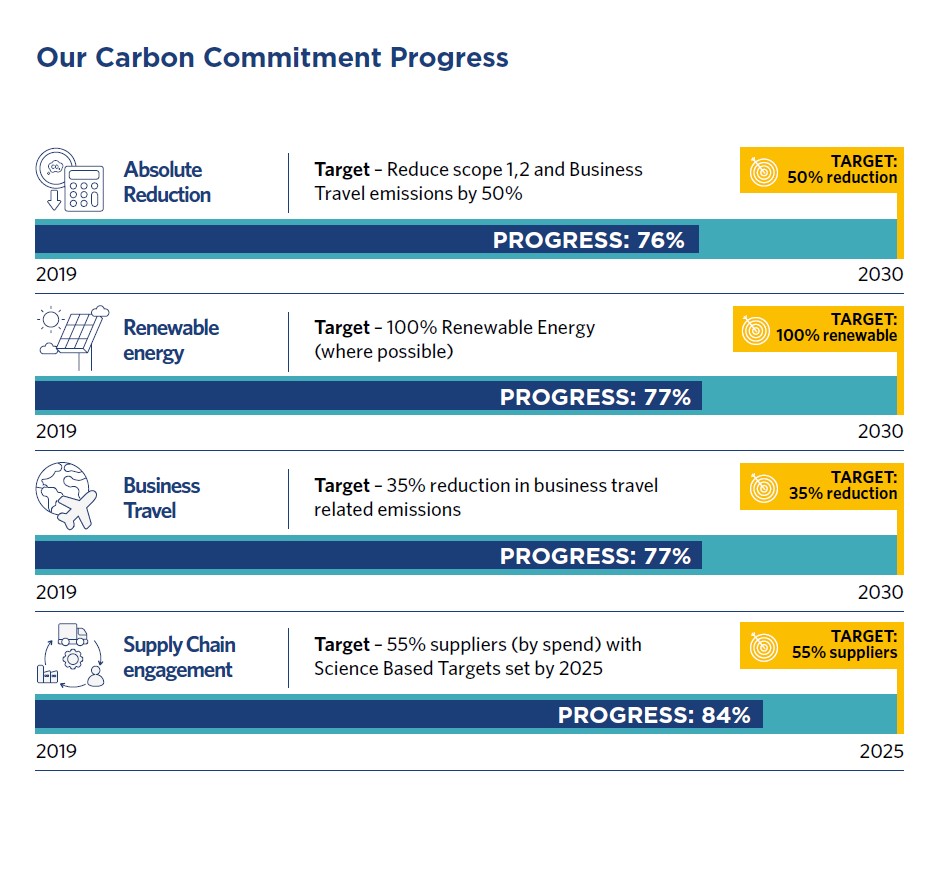
We continue to make strong reductions in emissions versus 2019 and we are making good progress towards our headline commitments under SBTi, as shown in the visuals shared below.

One of the key actions we’re taking to decarbonise our business is shifting to renewable forms of energy to power our offices. Our goal is to have 100% of the energy used in our global office portfolio matched by certified renewable electricity by 2030. In recent years we’ve made significant progress in this area, thanks in a large part to our work in setting up power purchasing agreements (PPAs)*.
In 2022, we signed three power purchase agreements – a mix of wind and solar – for our offices in Sydney and Melbourne. Our PPAs are performing well and providing 22% of our global renewable electricity coverage. In addition, purchased renewable electricity contracts cover all offices in the United Kingdom with 100% renewable electricity taking our global renewable electricity coverage to 77% and renewable energy coverage to 55%.
To deliver on our commitments and targets, carbon reduction needs to be threaded through all our operations from our building choices and the suppliers we work with to how we package the food in our restaurants. We are busy ensuring we have robust plans to take us to 2030 and beyond and will continue to share these with you.
Our primary sustainability focus is carbon, as it is our most material environmental impact as an office-based organisation. However, we continue to engage with our employees and suppliers on other sustainability topics such as reducing single-use plastic and consumption reduction.
Carbon offsetting in support of local environment and communityIn 2017, we partnered with UPM GmbH to support a Gold Standard certified carbon offsetting project in China. Through this partnership, which ended in 2024, we supported over 5,000 impoverished families in rural China by helping fund an initiative that gives low-income people access to clean, convenient and free biogas for cooking, heating and lighting. The Sichuan Household Biogas Programme's aim is to install 1 million biogas digesters – which recover methane emissions from animal manure to provide clean fuel – and smoke-free cooking stoves in one of the poorest regions in China. Overall the Sichuan Household Biogas Programme has provided nearly 400,000 poor rural households in China’s Sichuan province with proven biogas digesters for animal manure treatment and with easy-to-use biogas cook stoves to replace coal and firewood. In doing so, it has saved enormous amounts of GHG emissions, promoted local sustainable development and improved the living conditions of smallholder families in many ways. We are building a carbon offset strategy to take us out to 2030 which will see us move to carbon-removal offsets to meet the requirements of SBTi and our net zero goals. In the interim, we continue to support carbon-reduction projects. Recent projects we have supported include Carbon Offsets Australia - an 100% Indigenous-owned and managed company on a mission to protect our climate by restoring soils and forests. We have also supported Rewilding Europe which has projects in Germany, Spain and Italy providing benefits from clean air and water, carbon sequestration and fertile soil, right through to flood protection, climate change resilience and enhanced health and wellbeing. |
Key documents
I think that the main reason for building a digester is that it helps save money. But it has also a lot of additional benefits: our home is now free of smoke, flies and smells. It is also much more convenient for me to manage our family business while taking care of the cooking. With more pigs we would even be able to use the biogas for lighting and heat water for the shower.
Huang Mingying
Resident of a small village in the Sichuan region