




Chasing Zero – Energy Transition
Sign up to receive updates on this series
Sign up now
 |
Nuclear power: This typically refers to electricity generated through nuclear fission, the splitting of atoms' nuclei into several parts. The vast majority of energy generated in nuclear power plants happens with fission of uranium or plutonium. |
 |
Nuclear fusion: Whereas the fission process, which drives all current conventional atomic energy, splits the nuclei of atoms, fusion combines atoms to release massive amounts of energy. This technology remains in the R&D phase, though has potential to provide almost limitless clean power. |
|
|
Small modular reactors (SMRs): These are advanced reactors that can be factory assembled and deployed on location, meaning they can be sited in areas unsuited to larger power plants. Advocates say the model will hold significant cost and time benefits during the project development stage compared to conventional reactors. |
 |
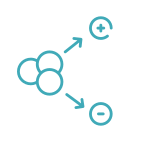
Ionisation: The process by which an atom or molecule becomes positively or negatively charged after losing or gaining an electron. |
|
|
Uranium: Is the heaviest naturally occurring element and can be used to power commercial nuclear reactors and produce isotopes for medical, industrial and defence purposes. |
Sign up to receive updates on this series

Partner, London and Israel Group

Director of Public Policy, London

Partner, London

Partner, London
The contents of this publication are for reference purposes only and may not be current as at the date of accessing this publication. They do not constitute legal advice and should not be relied upon as such. Specific legal advice about your specific circumstances should always be sought separately before taking any action based on this publication.
© Herbert Smith Freehills Kramer 2026
Receive timely insights and briefings from HSF Kramer, tailored to keep you informed and ahead
