


Download Alumni Matters 2025
Get your copy now
Download PDF (8MB)
I studied law at university, but I never really had any idea of becoming a lawyer. Growing up, I wanted to be either a Formula One racing driver, a primary school teacher, or my dream job was that person who sweeps up hair at the hairdressers! That looked very therapeutic to me. I had limited horizons, as you can see.
Ultimately, I didn’t want to be a maths teacher or a science teacher, which were my strong subjects. Law seemed to take some of the analytical problem solving elements of the maths and science that I liked and put it in a new arena dealing with evidence and precedent and those kinds of things. I finished university without having applied for a training contract. I graduated and then got a couple of paralegal jobs just to get a bit more of a feel as to what a career might be like day in, day out. I applied for a couple of training contracts and got an offer from Herbert Smith (as was).
At the time, Herbert Smith Freehills Kramer (as it now is) was the most preeminent litigation firm. I wanted to go into disputes rather than transactional work. I qualified in 2009 into one of the general commercial litigation teams, which is what I did for the next five or six years.
Whilst I was doing dispute resolution day in day out, I had always had in mind that I wanted to put my legal expertise to the greater good in some way. Before I started with Herbert Smith and for a few years, I was really fascinated by how important to a just society the rule of law is. I spent some time in Burundi towards the end of their civil war. Then I came to Herbert Smith and did quite a lot of work for the government of Sierra Leone. I had this thought, on top of the daily work I was doing, that perhaps there’s somewhere or something where I could really help and add value to societies that need fundamental legal infrastructure to protect rights, to ensure justice. My experience in both those jurisdictions was that this work is heavily politicised. Progress is slow and it’s extremely fragile. I realised that was probably going to frustrate me. I like problem solving. I don’t like failing to solve a problem.
In 2011, the UN published their Guiding Principles on Business and Human Rights. The UNGPs, to me, looked like a dawning of a new era where companies would become more accountable in relation to human rights. That being the case, particularly given the influence of multinational enterprises, I felt I was working in a place where our clients were probably going to need some help and advice on this. From 2011 onwards, I read extensively into business and human rights and responsible business. Most of what was being published was on the policy side or by NGOs. There wasn’t a lot with the corporate voice in it yet. I started to build my expertise and try and visualise what this could look like as a practice area and the areas where our clients would need help.

Oliver Elgie
I did, perhaps a little later. I came back from a client secondment in 2014 and suggested to my supervising partner and the head of my group that business and human rights was going to grow in influence and become an increasingly legal sphere. I saw a business opportunity. At that stage, I wasn’t able to persuade my immediate partner bosses, but I am resilient and I persisted.
Alongside a full portion of dispute resolution work, I also approached other partners around the firm, particularly those focussing on sectors where human rights risks were more pronounced and started to build the practice that way. And we started to do work, winning significant instructions over several years from key clients and leading companies and steadily growing our revenue streams.
This goes back to my desire to be engaged in problem solving, I thought there would be more chance to do this in-house. I had seen how this might work during client secondment, and I had friends who had gone in-house and recommended it. Moving into a consumer goods area was something that was high on my priority, because the ESG-related impacts are very real. There is much more regulation and direct engagement with consumer stakeholders.
SHEIN is a young yet exceptionally fast-growing e-commerce company in the fashion industry. They advertised for a senior in-house role dedicated to ESG, which does not come up very often and more or less matched exactly my CV, and it was just what I wanted. I applied. The EMEA GC, (who recruited me) said they had two minimum requirements (on top of being a brilliant lawyer, of course): you have to be very kind and should have some prior in-house experience. But she said she was willing to make an exception for me, although I wonder which one she was talking about! Happily, I succeeded and joined SHEIN in April 2024.
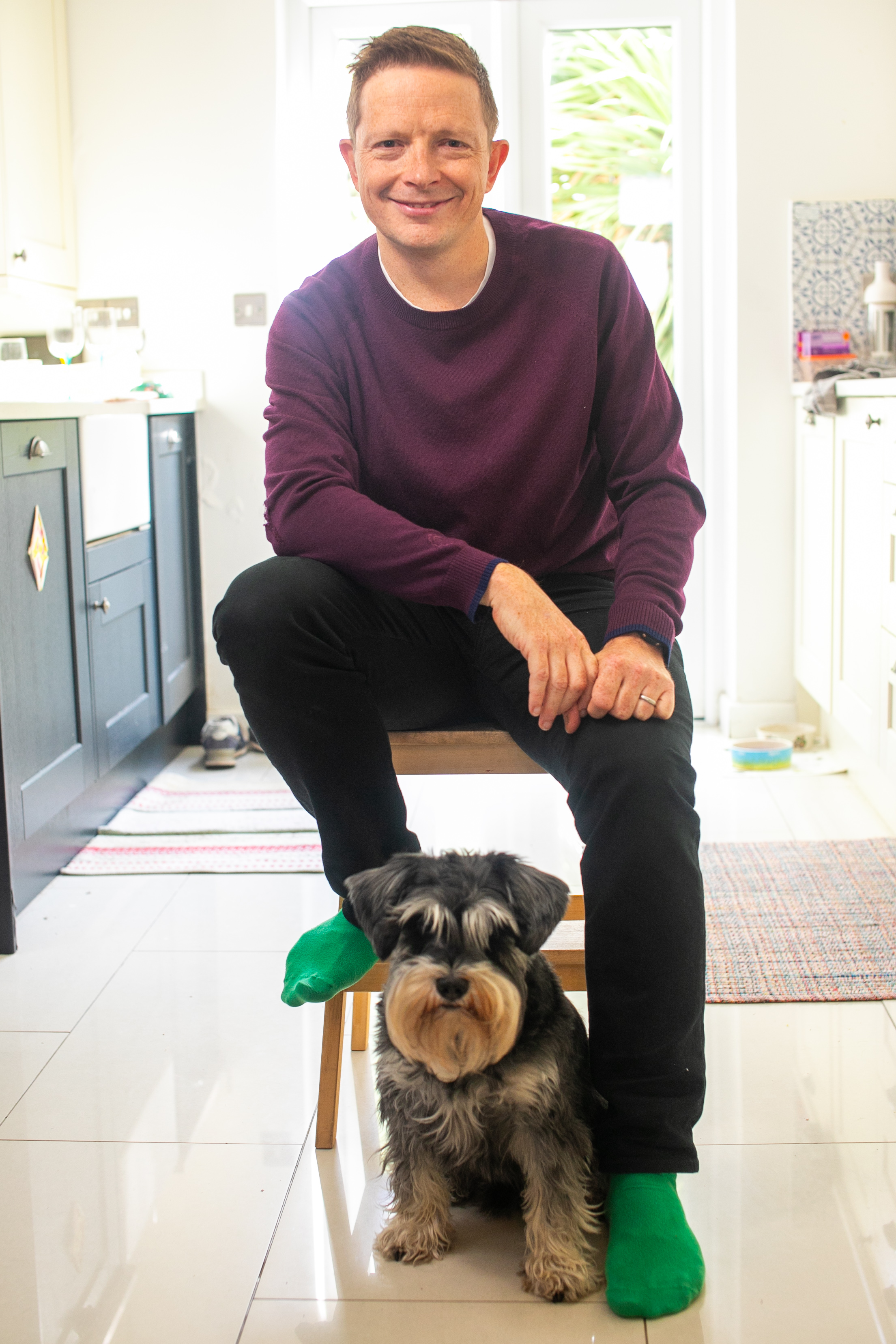
Oliver Elgie
Alumnus of London office
2007 - 2024
I advise the company on the ESG aspects of our operations, particularly focused on the EMEA region. The ESG legal landscape is constantly evolving. I make sure that we know what’s coming, we’re on top of what we have to do, and getting alongside the business to make sure that we can implement what we have to do as efficiently as possible. Beyond mere compliance, there’s some real competitive advantage to implementing ESG strategies well. It’s such a matrix of different laws. If you can coherently put policies, strategies and processes in place that will help you be compliant across all of those regulations and deliver on the expectations of consumers and other stakeholders, which are often higher than the law, then you really can make things more efficient. I also help with our interactions with regulators in EMEA, including consumer regulators, competition regulators, environmental regulators, who often have queries or questions or they’re looking to check on what we’re doing. These are the core of the role. But it’s a busy team and there are always opportunities to advise and support the business on basically anything, which is great.
Speaking in general terms, the trend in the overall business environment at the moment, if you step back a decade or two, is definitely towards increasing respect for human rights and protection of the environment, including by business, and there has been increasing attention and regulation around that. That said, over the last couple of years, there has been a noticeable headwind and a pushback in different regions. We see that in the EU with the delay to the EU Deforestation Regulation and the Omnibus proposal, which is looking to alter the scope and impact of the Corporate Sustainability Reporting Directive (CSRD) and the Corporate Sustainability Due Diligence Directive (CSDDD). It’s uncertain where it will end up. But, that uncertainty in itself means that business is in even greater need of clear and strong legal guidance.
That said, the key principles that drive this movement (i.e., the UNGPs, the OECD MNE guidelines, the SDGs etc…) are still there. That is still the direction of travel. Maybe it’ll be a slightly slower path. Or a different path. But the business case for respect for human rights and good ESG performance remains clear.
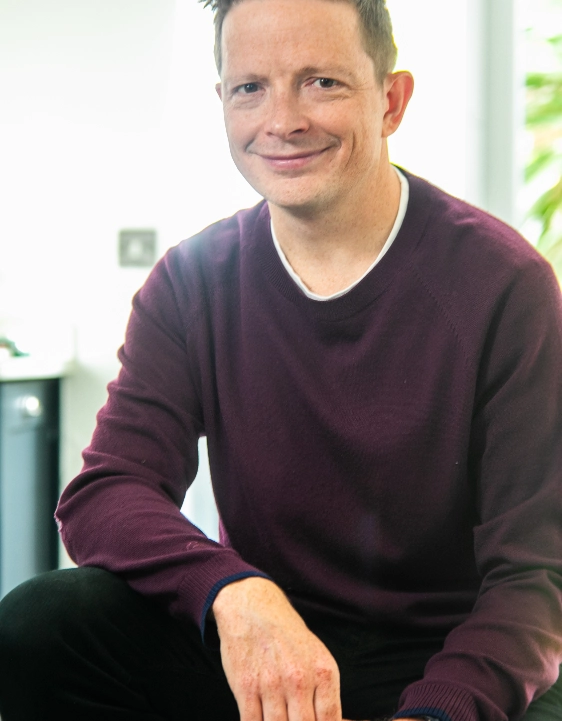
Oliver Elgie
There’s always that drive. Sometimes you have to make a financial investment in an initiative, and that investment yields a return over a certain amount of time through decreasing risks, increasing efficiency and/or contributing to long-term business resilience. It is easier to make that case. Other times, the cost and other investment of compliance is significant. Much of the debate around the incoming EU laws focusses precisely on that, with many businesses going public on what they see as significant costs of, and/or operational difficulties with, compliance. No business likes cost, of course, but (more fundamentally) no goal, no matter how worthy (or agreed upon), can be achieved through rules that cannot be practically implemented.
It’s brilliant. I enjoy what I do, so it feels like less of a balancing act. The team at SHEIN are also really great and supportive. At SHEIN, the focus is on the quality of the work we do, the efficiency with which we do it and how well we support the business’ needs. Subject to those business needs, where and when we do the work is unimportant. I have two children, aged 11 and 9, and that flexibility helps me manage my time. My wife is an anaesthetist who leaves the house at around 6.00am and only gets home between 6.30pm and (sometimes) very late. Supporting her career is incredibly important to me, so the flexibility and focus on quality at SHEIN really helps in the home management, supporting my wife and raising my children.
Worth Unlimited was founded in 1997, with the vision that every young person should have the opportunity to realise their unlimited worth and potential. We do this by creating safe spaces where youth can be heard, they can be valued, and they can grow in a supportive environment. The work involves counselling, mentoring, youth clubs, things like that, usually in areas of relatively high deprivation. This is close to my heart. I grew up in Croydon in the 1990s, and it was not always easy growing up as a teenager and it seems even harder for the modern generation.
I have always tried to do voluntary or charity work. I was a primary school governor for many years and this opportunity came up just after I had stepped down from that role. I’ve come to realise that the way we think, as lawyers, is not the way that everyone thinks. Sometimes just analysing things in a very legal way, focussing on the ultimate objective and appropriately weighing the relevant factors, whilst being able to put aside irrelevant factors, can really help to produce a decision-making framework that might seem second-nature to me, but is not always so obvious to others with other skillsets and expertise. I love being part of a body where we can bring different skills together towards a shared goal. So, perhaps I made the right choice to go into law after all and not sweep hairdressing salon floors!
Transformative change: Shaping the future
Our Senior Alumni Ambassador shares his thoughts on the latest developments from the firm and alumni network
Reflections from Jonathan Scott of a career shaped by curiosity, courage and a touch of charisma
Maria Wang-Faulkner encourages everyone to capitalise enthusiastically on the potential while paying heed to the risks
Joshua Goldman and Hannah Lee are keeping calm in high-paced environments
Career milestones, unexpected lessons, Shein and ESG and what keeps him inspired
Lewis McDonald, co-head of the Herbert Smith Freehills Kramer Global Energy group, offers his thoughts on the energy trilemma
Mallika Mathur, Robin Carvell-Spedding, Mark Tudor and Matthew Warren unpack the three-way balancing act facing policymakers and industry leaders alike
Three alumni all now at the Asian Development Bank give fascinating insight into the social purpose of the bank
Justin D’Agostino, Rebecca Maslen-Stannage, Howard Spilko and Paul Schoeman recount how the combination came about
Ajneet Jassey and Jennifer Ewah are driven to ensure their organisations are operating responsibly
Former partners turned career NEDs explain how stepping back can offer the clarity needed to lead forward
Ean Brown shares his story of founding a start-up, the thrill of creating something from nothing, and overcoming the challenges of starting a business
Ben Jolley and Andy Leadston talk about their time away from Herbert Smith Freehills Kramer and what brought them back
Get your copy now
The contents of this publication are for reference purposes only and may not be current as at the date of accessing this publication. They do not constitute legal advice and should not be relied upon as such. Specific legal advice about your specific circumstances should always be sought separately before taking any action based on this publication.
© Herbert Smith Freehills Kramer 2026
Receive timely insights and briefings from HSF Kramer, tailored to keep you informed and ahead