

Download Alumni Matters 2025
Get your copy now
Download PDF (8MB)
One of the deterrents for lawyers pondering whether they should become a non-executive director is the risk of being held personally liable for decisions the company makes. Regulators and the public at large are ever more inclined to point the finger at NEDs when things go wrong. That is certainly the case, says Mike Ferraro, who has much experience not only of being an NED but also a CEO, but he applies the ‘pub test’ for all key decisions, that is, whether that decision would be regarded as fair and understandable if you were to have a casual conversation with someone in a pub. “I am not saying the pub test is definitive, but I always ask myself that question whenever the board is making a decision, no matter how small, and so far I haven’t come unstuck!, Mike says.
Both Mike and Gillian have important roles for major charities, in Mike’s case for the Australian Red Cross, which he joined in July this year as a non-executive director and in Gillian’s case for Cancer Research UK, where she is GC and looks after their life sciences biotech. That is a lot of responsibility: the Australian Red Cross, which has a turnover of A$1 billion a year, is involved in disaster recovery, migrant relocation and is the sole provider of blood to the Australian government and other organisations. Cancer Research is the world’s leading cancer charity and one of the biggest life sciences operations in the world.
Gillian Fairfield
Each of Mike and Gillian are corporate lawyers of some renown. Mike spent the best part of a quarter century with Freehills, following which with Herbert Smith Freehills over two separate periods (he left the first time to become general counsel for BHP for three years). He finished his career as global head of Corporate of the combination firm. He then moved into business, becoming the CEO of Alumina, the Australian mining company, until 2024.
Gillian by her own admission knew little of the world of law or life in a big City law firm before she took up articles at Freshfields. She came from a family of engineers, but was particularly drawn to the rigour and intellectual challenge of the law and in particular corporate finance. She moved to Herbert Smith (as was) in 2004, becoming a partner in 2008 and advising on a steady stream of high-profile deals involving public takeover bids, M&A and joint ventures until she left the firm in 2017.
Much though they enjoyed the challenges of handling the most complex corporate deals, each felt at a certain point that they needed to branch out. The law was becoming repetitive for them. “The deals don’t change very much after a while, even if they get more complicated,” Mike says. For Gillian, the increasingly narrow specialisation demanded of lawyers was not appealing to her natural intellectual curiosity.
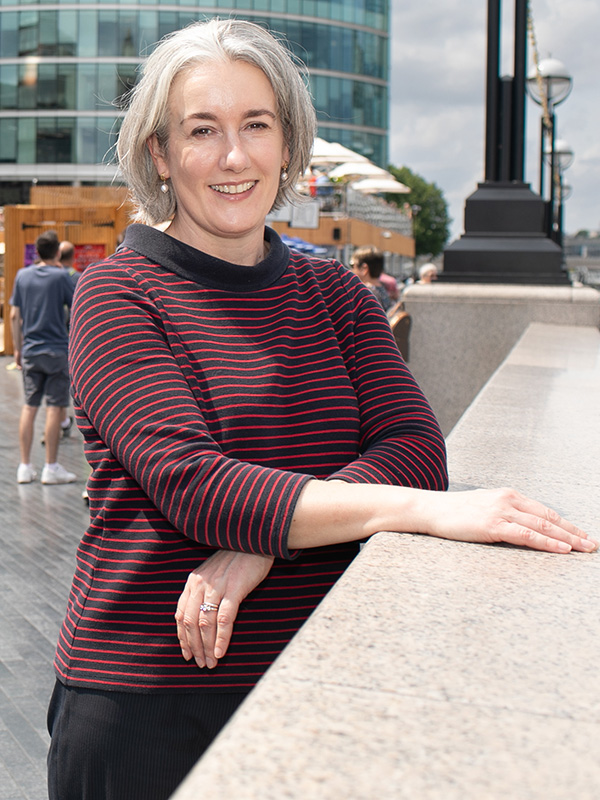
Gillian Fairfield
Alumna of London office
2004 - 2017
Mike moved seamlessly into an NED role with Alumina – actually while he was still a partner with the firm. Gillian chose not to line anything up until she had left the firm, but as fate would have it, only days after leaving the office, she was travelling in South Africa when she got a call from the Chair of Lonmin plc, the mining company, to see whether she would be interested to join the board of directors.
She knew the company well, having advised Lonmin as a client, and was intrigued to take up the role. She served as an NED for Lonmin for two years, including sitting on the company’s remuneration, nomination and social, ethics and transformation committees.
Obviously, lining up roles whilst still a full-time partner is very difficult – most people just don’t have the bandwidth to do that, and Gillian comments – “It was reckless of me,” she says with a laugh. “I thought it made sense not to bounce myself into any quick decisions without having the time to consider my options fully, but I hadn’t realised what made me tick until I stripped off that exoskeleton of being a full-time lawyer with such a good law firm. That was a shock!”
For Gillian, as general counsel of one of the world’s largest and most varied biotechs (Cancer Research is the second biggest deal-doer in oncology in the world) but one which is run on a charity budget, one of her main tasks is marshalling her limited but talented resources. “We are a charity and have to account for every last cent. We want as much money as possible to go towards the research. We do not have the budget of the large pharma players – I find that simultaneously exhilarating and terrifying,” she says.
She was delighted when they won The Lawyer Award earlier this year for Legal Team of the Year covering commerce and industry. Ever-conscious of the budget, none of them could afford to attend the ceremony and it was only through the generosity of law firms who had booked tables with extra spaces that three of the team were able to attend. They didn’t expect to win, so were totally unprepared for the accolade. “It was a total surprise, but a real boost for those in the team who are working their socks off.”
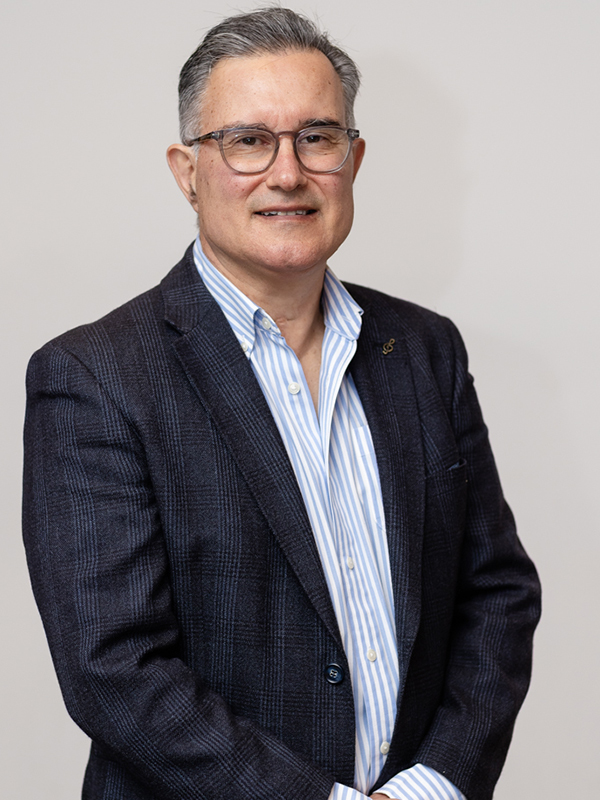
Mike Ferraro
Alumnus of Melbourne office
1991 - 2017
Definitely, Gillian responds. They have breadth of vision, strategic thinking, and the ability to ask the difficult questions. However, she does temper that statement with the thought that it may depend on which law practice the lawyer has done. Ideally, she says, they should come from a discipline which has given them the breadth to see at close hand what makes businesses succeed – and what makes them fail. In that respect, she feels her corporate background was vital.
Having corporate experience is essential, Mike adds. He is aiming to bring his 40 years of experience in the corporate world, both in law and in business, to help apply that corporate knowledge in how the charity is run. “I hope I can add some value, to do good in the most effective way. I can draw on my knowledge and experience to help the charity solve whatever problems are thrown its way in a careful, measured way.”
What they shouldn’t be is risk-averse, both agree. “The type of lawyer who is welcomed to boards is one who is commercially minded, and not process-driven,” Mike says. “As I often say, boards want lawyers who get off the dance floor and onto the balcony.”
Gillian echoes this sentiment. “Boards need strategy and vision and don’t need nitpicking. The worst thing is a board member who says, ‘I don’t know, but I want the record to show that I don’t like it,’ because that’s no use to anyone.”
As well as her Cancer Research roles, Gillian is also a non-exec board member on the Earlham Genomics Institute, a trustee of American Friends of Cancer Research, a trustee of the National Trust for Scotland, and a member of Strategic Advisory Board of Cranfield School of Management.
Mike was also previously a NED of a travel company in Australia, Helloworld Travel (which proved particularly difficult during lockdown) and is also chairman of a CEO Circle group, a forum where CEOs can meet in confidence to talk through issues they are facing with others in the same boat. “It can be quite lonely, being a CEO, and this is a good outlet for many of them to be able to swap ideas with others,” Mike says.
Mike Ferraro
For any lawyer thinking about taking on a non-exec role, both Mike and Gillian are absolutely clear: do your diligence on the business or charity or organisation that either they are keen to join or who have approached them. Find out who else is on the board and think about whether these are the type of people you feel you can work with.
When it comes to applying, your research should throw up issues that you think need resolving or challenges the company or charity faces. Go in with possible solutions once you are apprised of the issues, Mike advises, to show that you will be able to offer support or guidance. Don’t say, ‘I was a lawyer’ and assume that those interviewing you will be impressed, because they won’t, he adds.
Equally, beware of companies being impressed by the fact you are a lawyer and wanting to take you on because they think you will offer legal advice. What they might be doing, says Gillian, is trying to get a lawyer on the cheap, in other words wanting you as a NED to do the role of general counsel. “When you scratch the surface, you sometimes realise they want a general counsel, but they don’t want to pay for one. So beware!” she cautions.
Gillians finishes with advice that she picked up from another NED, who told her that people take a non-exec role for one of three reasons. One was they needed the money (not a good reason). The second was for the kudos, but, with growing liability attached to NEDs, you should be careful what you wish for. And the third, and Gillian believes the only valid reason, is that you like and respect the organisation and the individuals within it. Gillian says: “If you stick to that mantra, you – hopefully – can’t go wrong!”
Transformative change: Shaping the future
Our Senior Alumni Ambassador shares his thoughts on the latest developments from the firm and alumni network
Reflections from Jonathan Scott of a career shaped by curiosity, courage and a touch of charisma
Maria Wang-Faulkner encourages everyone to capitalise enthusiastically on the potential while paying heed to the risks
Joshua Goldman and Hannah Lee are keeping calm in high-paced environments
Career milestones, unexpected lessons, Shein and ESG and what keeps him inspired
Lewis McDonald, co-head of the Herbert Smith Freehills Kramer Global Energy group, offers his thoughts on the energy trilemma
Mallika Mathur, Robin Carvell-Spedding, Mark Tudor and Matthew Warren unpack the three-way balancing act facing policymakers and industry leaders alike
Three alumni all now at the Asian Development Bank give fascinating insight into the social purpose of the bank
Justin D’Agostino, Rebecca Maslen-Stannage, Howard Spilko and Paul Schoeman recount how the combination came about
Ajneet Jassey and Jennifer Ewah are driven to ensure their organisations are operating responsibly
Former partners turned career NEDs explain how stepping back can offer the clarity needed to lead forward
Ean Brown shares his story of founding a start-up, the thrill of creating something from nothing, and overcoming the challenges of starting a business
Ben Jolley and Andy Leadston talk about their time away from Herbert Smith Freehills Kramer and what brought them back
Get your copy now
The contents of this publication are for reference purposes only and may not be current as at the date of accessing this publication. They do not constitute legal advice and should not be relied upon as such. Specific legal advice about your specific circumstances should always be sought separately before taking any action based on this publication.
© Herbert Smith Freehills Kramer 2026
Receive timely insights and briefings from HSF Kramer, tailored to keep you informed and ahead