

Download Alumni Matters 2025
Get your copy now
Download PDF (8MB)
REBECCA MASLEN-STANNAGE: It had been on our mind as a strategic priority that we really needed to do something in the US, and the partner sentiment within the firm increasingly was in that direction. All around the world, we were being told that we needed significant US transactional capability. Probably around two to three years ago, Justin and I started to engage with the US market in earnest to build relationships, understand the lie of the land, and get into the flow of what was happening there.
JUSTIN D’AGOSTINO: I remember very clearly the buzz in the media surrounding the merger between Allen & Overy and Shearman & Sterling. I said to Bec we need to get ahead of this if we want to proceed. The way I describe it is that Herbert Smith Freehills was the last top tier international firm that didn’t have scale in the US.
So Bec and I jumped on a plane and went to the US to meet managing partners of a number of US law firms. We wanted them to have us in their minds when they were thinking about their strategy. We weren’t thinking necessarily about a combination at that stage, but it was all grist to the mill, useful intelligence. After that trip, we concluded for a number of reasons that our best option for a successful combination would be with a strong US firm in the US $250-400 million range.
There were four US markets that we were interested in, at least initially: New York, Washington DC, Silicon Valley and Texas. Getting a foothold in all these markets would be brilliant, but we would be happy with just one of them.
We hired consultants who identified six or so firms in this $250-400 million market, which included Kramer Levin, and we prepared to meet them all. Then, by chance, we got a call from another consultant who was in touch with the managing partners of Kramer Levin and asked if we wanted to meet them. When we mentioned this to our New York managing partner, Scott Balber, he said if we could combine with Kramer Levin, we would have really struck lucky. This was the validating moment for us. We immediately arranged to meet them, sending out an advance party of Alison Brown and Gavin Davies. They came back very positive.
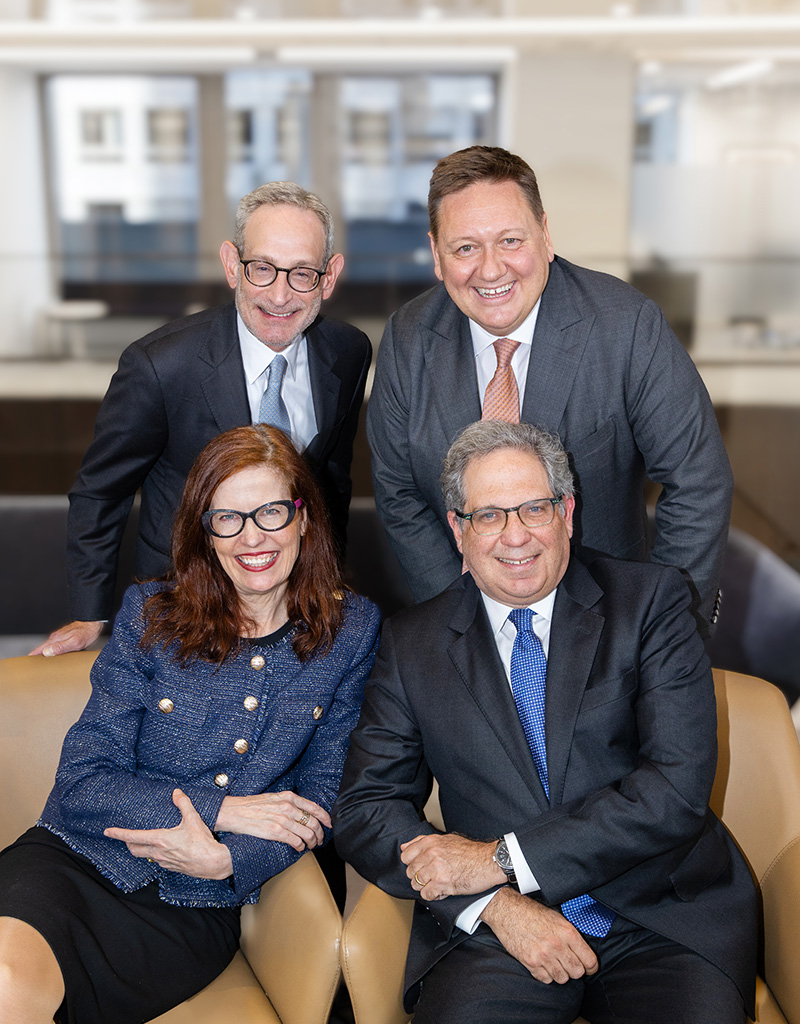
PAUL SCHOEMAN: Wind the clock back, Howard and I were the co-managing partners of Kramer Levin. We were alert to changes in the legal market and were considering our options. The business was going well, but we were looking at how we could grow and perhaps be part of a larger firm.
I knew of Herbert Smith Freehills and was well aware of their great reputation, but did not have any direct interaction with them previously. People I knew who were knowledgeable about the legal market globally, and particularly in London, always spoke highly of HSF. As Justin said, it happened that a mutual contact mentioned HSF and suggested that introductory meeting.
HOWARD SPILKO: What came across clearly was that HSF was looking to establish a significant US presence. They had a well-established litigation capability in New York, but we learned that their transactional practices really required more of a US presence. That is what their clients were telling them. For us, we were looking to increase our scale and expand our transactional reach, tapping into extra sources. That really meant looking further afield and outside the US. So, for us, we could easily see a coming-together of the firms’ strategic imperatives: HSF wanting to have transactional capability in the US and us looking to tap into more transactions globally. That was very compelling from a strategic standpoint and made a lot of sense to us.

Justin D'Agostino
Global CEO
HOWARD: Yes, that is true, but one of the aspects that particularly attracted us to the combination with HSF was that there wasn’t a significant overlap of geographies. That meant that, in the US, we would be able to retain a lot of the feel of the legacy Kramer Levin firm rather than get folded into a large US firm, which would come with all kinds of challenges.
JUSTIN: To be honest, we were also looking for a firm that we thought was real quality, and that is what Kramer Levin provided. They have an elite reputation in bankruptcy and insolvency, for example. They were looking to expand their private equity practice, which is exactly what we want to do. They are a top-tier real estate firm in New York. In fact, we can now properly claim to be the only law firm with a top tier real estate practice in New York, London and Australia.
PAUL: We very much enjoyed meeting them. Much of it was a learning experience for me and many of our other partners to understand the capabilities of the firm and to get to know the people. We quickly came to understand there was a common culture: between the two firms, there was a commitment to excellence in our work and really caring about our people. Those two principles brought us close together very quickly and served as the foundation for what we’re building today.
JUSTIN: We liked each other from the get-go. They were – and are – top lawyers: Howard has built an impressive book of corporate business, and Paul is hugely respected in the white-collar defence and investigations market in New York. They are as good as lawyers as you’d meet from any law firm. Yet, they were also very kind and gracious.
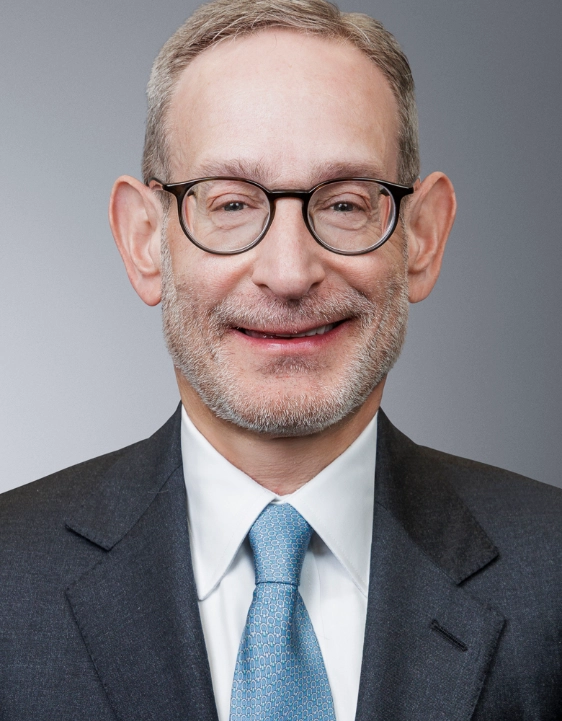
Howard Spilko
Partner, Global Head of Private Equity and Chair of Corporate, US
JUSTIN: After we’d had a meeting of minds on the vision, our practice groups and managing partners did a lot of due diligence to analyse the synergies. That came out very positively.
We only had one overlap, which was in New York in litigation, as Howard says. This combination is not leading to rationalisation and efficiencies. This is all about growth.
PAUL: What was very attractive to us was to become part of a single firm that was interested in growing in the US and to be able to do that in a smart, strategic way, rather than just squeezing two existing law firms together. For us, the geometry of the two firms and the shared vision of investing in the US was very compelling.
HOWARD: Coming in from different vantage points and playing at the highest level was really what was very attractive to us about the combination. Early on, Justin and Bec put together a really well-done presentation of their vision of the combined firm. That was very persuasive and completely consistent with what we were thinking.
Two things then stood out for me. One was that Justin and Bec had really done their homework. They really understood who we are. Second, their aspirations fit with our aspirations. But we did worry that they had just put their best foot forward. They’ve sent us their most charming and persuasive representatives. What if the others were not like them?
We went to London and met many of their partners, including some who had flown in from Australia and other regions. We felt that these were people who we could partner with. We quickly hit it off with a wide range of practice leaders. Some of our concerns that the cultures wouldn’t fit were quickly dispelled. It all went extremely well and, from that point on, we had a lot of confidence that this was real.
PAUL: The fact that we had a very nice dinner that first evening where we all relaxed and got to know each other was very helpful. I do feel that maybe there are stereotypes of Americans, and maybe there are stereotypes of Brits, for example, that were quickly broken down or, to the extent those stereotypes exist, we don’t on either side represent them.

Rebecca Maslen-Stannage
Chair and Senior Partner
PAUL: Howard and I handled a lot of the negotiation on our side. We were aided by a number of members of our executive team, including some of Howard’s colleagues in the Corporate department who actually did some of the heavy lifting. I will say there were no major stumbling blocks. Everybody came to the negotiating table with the shared objective of trying to work something out that would allow us to do what seemed like such a great idea.
REBECCA: That was interesting. In the merger with Freehills, I was part of the Freehills team, together with Martin Shakinovsky, and our Herbert Smith counterparts in that negotiation were then Steve Wilkinson and Ben Ward. It made sense to ask Steve and Ben to negotiate this deal, supported by an internal team that also included Clare Wilson, our general counsel, and Alison Brown.
REBECCA: It was very helpful that we had been through this before with the Freehills merger. This was not like negotiating on behalf of a client. From our point of view, we were all in it together as partners. We didn’t want anyone to feel they had been shortchanged or that they had been treated unfairly. Similar to the Herbert Smith Freehills merger, there was an honesty and openness to those negotiations, a real transparency.
HOWARD: It was our first window into the lawyering ability of the legacy HSF team because they had taken the lead in drafting the documents. It was a bit of a trial to see, OK, well are these people really good? We were very impressed with the documents that were prepared and the way that they went through the issues with us in a very disciplined and professional way. As Bec says, it was always in a spirit of partnership from the very beginning. It was not adversarial and where there were issues, we never felt as though they were seeking any advantage.
Paul Schoeman
Executive Partner, US and Managing Partner, Disputes, US
HOWARD: We talked about legitimate risks and concerns about different aspects of the deal and how best to mitigate those issues or to address the issues in a fair way that made sense for both sides. This is not a transaction that you do the deal and never see the person again. You actually have to live with the partners. It was not a zero-sum game. We were building relationships.
PAUL: The key to the entire process was the first principles that we started with, that it really was in the interest of both firms to do the combination. There was a strong level of trust.
REBECCA: There weren’t any red lines. There were shared principles that we needed to test right up front. One of those was that we share profits across our entire international firm. We don’t believe in alliances or Swiss Verein operations. Sharing profits leads to collaboration between partners, making sure that everyone gives their best to the client and everyone puts their best foot forward. The cultures are definitely aligned. We are very collaborative. We chase work together. We work well together. There is a real respect between us. We value our people. It is a very inclusive culture.
JUSTIN: I agree. Both firms were absolutely clear we wanted to keep our cultures. Kramer are very proud of their culture, and they were adamant they didn’t want to be swallowed up. They wanted to retain their brand in the US. We were very supportive of that, and we have made sure that they have influence in our new global firm, with representation on the Partnership Council and on the Executive.
REBECCA: I would just add that Paul and Howard were very keen to continue to use the Kramer name in the US, where the brand is well-respected. For us, that was a no-brainer because their name was much better known than our Herbert Smith Freehills brand in the States. Using the Kramer name globally would help reiterate our new combined reach.
PAUL: The logic of the combination is really what’s driving all this. It’s made everything go very smoothly, and everybody sees that there are benefits to individual partners, to the collective partnership, to the firm and to our clients. The fact that there was such a clear rationale and logic has smoothed the way and made it a relatively easy transaction.
JUSTIN: Yes, we did. We had to keep control of the narrative, to keep the partnerships properly informed. As it happened, nearly all of the partners saw the wisdom of the strategic imperative, but we had to do a certain amount of explaining on why we were not going for a merger of equals in terms of size. We explained who Kramer were and why they were a suitable partner. If it had leaked, we wouldn’t have been able to tell that narrative in the way we wanted to, and so we kept it incredibly tight.
PAUL: We were concerned if news of our talks leaked. We did have alternative scenarios for the announcement. We wanted always to be ahead of the messaging. We were lucky it didn’t leak out, except on the very day we announced, but that was because of time differences around the world. New York was the last place to announce. We had to accelerate our town hall meeting with our people by a few hours. But it all went very smoothly.
HOWARD: I wouldn’t say that we had no fears. This was a weighty decision and one of the most important decisions that the firm could ever take. We took it very seriously to go to the partners with a comprehensive set of reasons and principles for the transaction. We spoke about why we thought it was in the best long-term interests of the firm.
PAUL: It was key to explain the strategic rationale of the combined firms. We knew if we could get a consensus around that, the rest could fall into place fairly quickly. Our partners saw the vision and saw that this was a very smart move for us. The other thing that really helped was the meetings between practice heads. Our partners were genuinely excited by the opportunities. It was great to see them getting on so well with colleagues from around the world.
JUSTIN: When we announced to the partners we had heads of agreement, there was wide acceptance because we had done a lot of the hard work before embarking on the contractual documents. That certainly helped to speed up the process.
REBECCA: As Justin says, the real key was that we had done that engagement with partners before we signed the heads of agreement. We had had that opportunity for partners to be brought along on the journey. We didn’t surprise them and they could see that their input had been reflected in what we were putting forward.
HOWARD: There is always a bit of melancholy associated with changing chapters and we’re cognizant of that, but we feel like the firm is in a tremendous position of strength to move forward in a very successful way and very well-positioned for the future in a competitive dynamic market.
HOWARD: Yes, there have been some curveballs in the US environment and we’re working through those. However, we expect that as things maybe settle down, there’ll be a significant surge of transactions into and out of the US as people regain their footing.
JUSTIN: For us, that is not really an issue, because the US is still the largest economy in the world. There will continue to be massive deal flows, capital raisings, disputes, innovation. Our clients, both US clients and non-US clients, are investing in that market and they want us to be part of that journey with them.
PAUL: We have found that the client base around the world is very eager to hear about developments in my area of expertise, which is white collar and regulatory, given all of the pronouncements coming out of the new administration. Two other partners and I just did a webinar on the US criminal and regulatory enforcement environment for some Australian clients, and we will replicate that for others.
For the combined firm, that is very valuable to let clients know we have people on the ground in the US who can decode what is happening. More generally, of course, the US is the biggest legal market in the world, as Justin has already pointed out, and it’s important for a global firm to be in all of the major financial centers in the world, including in the US.
REBECCA: With all upheavals, at first there’s caution, there’s uncertainty, there’s concern. And then people adapt and position for the changed environment. That’s what we’re doing. We continue to keep an eye on the big picture and pursue our strategy.
JUSTIN: And remember that US investment capital is still driving a lot of growth, as we have seen in India and Indonesia, for example. So, US private equity is enormously important not just to their own domestic market but to the growth globally.

Howard Spilko
Partner, Global Head of Private Equity and Chair of Corporate, US
REBECCA: Actually beforehand, there was one funny moment at a partners’ conference in Bangkok in 2023 when, as we were talking about the US market, behind us on the screen was a large unfurling US flag, and all the partners were expecting us to make a big announcement! So they were a bit disappointed at that time but it was a brilliant backdrop!
JUSTIN: The day before we announced to the partners, I happened to be in South Africa, for an annual ceremony for Prince William’s Earthshot prize, for whom we do some pro bono work. I had a meeting with the partners talking about US strategy, but couldn’t actually tell them we were about to make a big announcement! At the same time, I was recording a video to be released the next day confirming the combination. I had to swear everyone to secrecy, including the cameraman!
PAUL: I don’t have any funny anecdotes, but I will say at dinners that we’ve had in New York, Washington, London with colleagues from around the world, I have always found that the partners sitting on either side of me are excellent dinner company. We always have a good time, and that is very telling.
HOWARD: Justin has also introduced us to an expression, which may be a rugby term, that ‘it’s all to play for’. We are not familiar with that term but have enjoyed using it since! Now, people talk about that all the time. When they schedule a meeting to occur ‘once every fortnight’, we had to look that up, too.
HOWARD: When we spoke to clients early on, they had a lot of great things to say about HSF. The general reaction has been extremely positive, and there have been immediate benefits. Just one example, an Australian client was bidding for a US government project but needed, on very short notice, to offer a surety bond. We received the referral from our Australian colleagues. When we first got the e-mail that they needed help, we jumped on it, and we were able to facilitate this arrangement that enabled them to get this bond to be able to put the bid in. If we weren’t around, there’s no way that that client would have been able to put the bid in. The partners in Australia who work with that client regularly are thrilled because they finally have people in the US from a transactional perspective who can assist with those matters. That’s a very real-world example of where there was a need in Australia for a US counterpart who is going to own and care about the matter and to respond. Now, hopefully, the bid will be successful and then we’ll be doing some of that work in the US.
JUSTIN: The proof of concept is coming through strongly, and, as Howard has just mentioned, work is now being referred into the US. We’re winning work internationally with a US component that we would not have won or we wouldn’t have been able to do the whole thing ourselves. We’re now able to offer a very different proposition. It is very interesting to hear from our Japanese clients, who regard us as trusted advisors, that they are very happy to know of our new US capability.
So, Howard, it’s all to play for!
HOWARD: We’re really excited about the transaction and think that there’s a very bright future for the combined firm.
PAUL: Both firms have a very strong sense of their history and their heritage, and we’re going to preserve that. We will have a shared history going forward, but our legacy, our history, how we got to where we are, is very important to both firms and will be preserved.
JUSTIN: I would close this roundtable by looking forward to what comes next for us. We’ve met our strategic need. We have found a fabulous partner. We’ve got an investment plan for the US.
The reality is this positions us in a very different way for the next decade. We will be one of the few law firms in the world that are in all the major financial centres of the world. But not only that, we have market-leading practices in both transactions and disputes in those centres that few other firms can claim to have.
And, if you look at where the world is growing in terms of legal services — the energy sector, the tech sector and digital infrastructure - these are also areas where we are leading. When you put together all these elements we have an opportunity to create our own definition of a global legal powerhouse, and that’s super exciting.
Transformative change: Shaping the future
Our Senior Alumni Ambassador shares his thoughts on the latest developments from the firm and alumni network
Reflections from Jonathan Scott of a career shaped by curiosity, courage and a touch of charisma
Maria Wang-Faulkner encourages everyone to capitalise enthusiastically on the potential while paying heed to the risks
Joshua Goldman and Hannah Lee are keeping calm in high-paced environments
Career milestones, unexpected lessons, Shein and ESG and what keeps him inspired
Lewis McDonald, co-head of the Herbert Smith Freehills Kramer Global Energy group, offers his thoughts on the energy trilemma
Mallika Mathur, Robin Carvell-Spedding, Mark Tudor and Matthew Warren unpack the three-way balancing act facing policymakers and industry leaders alike
Three alumni all now at the Asian Development Bank give fascinating insight into the social purpose of the bank
Justin D’Agostino, Rebecca Maslen-Stannage, Howard Spilko and Paul Schoeman recount how the combination came about
Ajneet Jassey and Jennifer Ewah are driven to ensure their organisations are operating responsibly
Former partners turned career NEDs explain how stepping back can offer the clarity needed to lead forward
Ean Brown shares his story of founding a start-up, the thrill of creating something from nothing, and overcoming the challenges of starting a business
Ben Jolley and Andy Leadston talk about their time away from Herbert Smith Freehills Kramer and what brought them back
Get your copy now
The contents of this publication are for reference purposes only and may not be current as at the date of accessing this publication. They do not constitute legal advice and should not be relied upon as such. Specific legal advice about your specific circumstances should always be sought separately before taking any action based on this publication.
© Herbert Smith Freehills Kramer 2026
Receive timely insights and briefings from HSF Kramer, tailored to keep you informed and ahead