


Download Alumni Matters 2025
Get your copy now
Download PDF (8MB)
Based out of New York City, she works with AI companies to increase individual and workplace productivity, drive business growth, and expand economic opportunity.
This will date me a little but, at the time I joined, it was just Freehills. I was still a law student at Sydney University and joined the Corporate Liability and Litigation team as a paralegal to start getting a feel for the practice of law. That then led to a summer clerkship and then a full-time position as a solicitor after graduation.
I graduated with a Bachelor of Law/Bachelor of Arts majoring in French studies and international relations, and was admitted as a solicitor to the Supreme Court of New South Wales. As a solicitor at HSF, I rotated through the Litigation and Property practices.
I had a lot of practice reps defining the question we were answering before we set about answering it. It sounds basic, but it’s surprisingly been a huge boon to me in my career. A well-framed problem is very often what’s missing, and creating that frame can unblock problems in the world of tech and business. When you have a lot of resources (teams, data, software, LLMs) at your disposal, it can be tempting to rush to solutioning mode. But a common failure mode is effectively ‘wasting’ those resources, and losing valuable time, solving the wrong problem in the first place.
Annette Bain, Cathy Murphy, Jason Betts: each in their own way helped me to see and appreciate what I had to offer (still a work in progress even to this day), which undoubtedly had a hand in the career moves I’ve made since HSF.
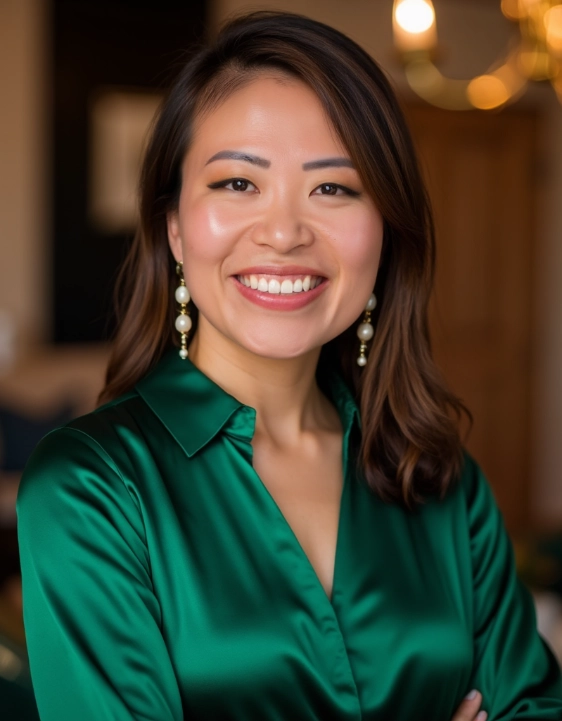
Maria Wang-Faulkner
Alumna of Sydney office 2005 - 2010
For any avoidance of doubt, I left when I decided the legal profession wasn’t for me. If I were to stay in the profession, it absolutely would have been at HSF Kramer. I left to move to New York and study at Columbia University. I obtained a master’s degree in international development so that I could make a career pivot into international aid and humanitarian work.
I had two roles at Google over my five years there. The first in revenue partnerships working with the world’s largest media companies (think News Corporation and The New York Times) to grow revenue through programmatic ads powered by Google. That was my very first introduction to tech, and I had a lot to learn. I was very fortunate in that Google was probably the best tech training ground I could have hoped for.
My second role was in product partnerships at a time when voice AI was emerging as a new technology and a new way for humans to interact with computers. Google had the Google Assistant while Amazon had Alexa and Apple had Siri. My role involved helping Google product managers build on-ramps for traditional publishers and brands onto voice AI - i.e. helping companies like Starbucks, Fandango, L’Oreal and Viacom build voice AI apps.
Yes. This switch of roles within Google from revenue partnerships to product partnerships was how I transitioned into AI. It helped that I was already at Google, in a partnerships role where I had proven myself, and I had demonstrated an ability to learn and add value in a new domain (ad tech).
I was at Adobe for two years, building first-of-its-kind partnerships in generative AI. Generative AI is where AI can take a natural language prompt and generate text, image, video, code or other output. Adobe has Firefly, its suite of image, video and music generation models.
The scope of my role was very broad and diverse - I’ll share a couple of highlights:
I’ve just started a new role at Stripe, a leading financial infrastructure company that processed over US$1.4 trillion in total payments volume last year and is the platform of choice for over half of the Fortune 100 companies and close to 80% of the Forbes AI 50. I’m leading Stripe’s strategic AI partnerships, with a focus on agentic commerce and other experimental product bets. Increasingly, transactions will happen on AI surfaces like ChatGPT or Claude.ai and AI will start to transact on our behalf. These use cases will need payment rails, trust and verification, and other infrastructure, and Stripe provides those, somewhat ‘out-of-the-box’, through APIs that developers can take and build on top of. My job is to craft and deliver on the partnership strategy that will ensure Stripe plays a central role powering the AI economy while safeguarding user trust and regulatory compliance.
I would encourage all of us to be both excitedly capitalising on the potential of AI while paying heed to the risks and implications if we aren’t investing in AI safety at a macro level and AI literacy at an individual level.
There are many reasons to be optimistic about AI’s potential. We stand to make massive productivity gains for knowledge workers because AI is great at eliminating toil (repetitive tasks that generally are fun for no one), freeing us up to do the more creative, original, emotive work that AI, by design, is less good at.

AI will increasingly democratise the building of software and the building of businesses. Now, anybody who identifies an unmet need can build an app in a matter of days or build and scale a business without needing a large team of developers. And besides increasing economic output, AI can also be a force for good in healthcare, education, and even for mental health and loneliness. For example, it can accelerate scientific research, support early cancer detection and drug discovery, and enable personalisation of treatment to individual patients. To go deeper into the benefits of AI, I would encourage everyone to read Anthropic CEO Dario Amodei’s blog post, “Machines of Loving Grace”.
There are causes for concern too. The increased productivity will mean job displacement, likely concentrated around more entry-level jobs, especially as AI agents become as capable as educated interns. There’ll be a need to rethink what it takes to enter today’s job market.
Bias in AI can perpetuate and amplify existing bias in hiring, lending and criminal justice; hallucinations, not discovered, can lead to misinformation; and there is a real risk of skill atrophy in writing, research and reasoning as we rely more and more on AI for these tasks.
And as AI systems become more capable, the potential for the malicious use of AI increases too - for example, in disinformation campaigns, cyberattacks, or surveillance and oppression in the wrong hands.
Thankfully, there are brilliant minds working on AI alignment (ensuring AI systems pursue goals and behave in ways consistent with human values) and AI interpretability (ensuring we can understand how AI systems work, as opposed to being ‘black boxes’).
Define ‘technically minded’! My husband is a software developer and he and I always joke that he would have made an excellent lawyer and I would have made an excellent software developer. The two professions are pretty similar if you think about it - built on language, logic and reasoning, and the handling of edge cases.
I don’t think you need to be technical, or be a software developer, to use AI or realise its full potential. Today, even non-developers can code up custom websites and apps, with vibe coding platforms like Lovable and Replit. A 91-year-old did this for his church group in a matter of days!
The barrier to building has never been lower. All you need to do is to visit Claude.ai or ChatGPT.com, a couple of hours, and a curious, open mind.
Yes, I was fortunate enough to be an adjunct professor at NYU’s Robert F. Wagner School of Public Service. I also provide executive and career coaching. Teaching and coaching are my way of paying it forward, and they’re also hugely enjoyable because, given the right combination of coach, client and timing, you have the power to alter an individual’s career/life trajectory for the better. They also give me an excuse to distil, codify and refine my own mental models and frameworks for navigating the world, jobs and corporations.
I founded a tech start-up in women’s metabolic health. We grew to 15,000 users, and our flagship product was the #1 ranked app in its category on both Apple App Store and Google Play. We raised venture capital and were backed by 500 Global, one of the world’s top three start-up accelerators alongside Y Combinator and Tech stars.
Ultimately, it didn’t succeed because we did not find product-market fit. I shared on LinkedIn my final update to my investors, which was part goodbye letter, part post-mortem, in the hopes that other founders would learn from my mistakes. You can read it here if of interest: https://tinyurl.com/byesimone
I’m a wife and mother of three, and I take those roles pretty seriously. That is to say: I make sure to spend quality time with my family and have a lot of fun with them because ultimately, that’s entirely the point, isn’t it? I took up learning the cello earlier this year and am loving it so far. I also stay active and do some light biohacking for health for longevity. And finally, we’re back in Brooklyn, New York, after a few years away and I’m enjoying rediscovering the city and rebuilding my community of friends/support network.
Transformative change: Shaping the future
Our Senior Alumni Ambassador shares his thoughts on the latest developments from the firm and alumni network
Reflections from Jonathan Scott of a career shaped by curiosity, courage and a touch of charisma
Maria Wang-Faulkner encourages everyone to capitalise enthusiastically on the potential while paying heed to the risks
Joshua Goldman and Hannah Lee are keeping calm in high-paced environments
Career milestones, unexpected lessons, Shein and ESG and what keeps him inspired
Lewis McDonald, co-head of the Herbert Smith Freehills Kramer Global Energy group, offers his thoughts on the energy trilemma
Mallika Mathur, Robin Carvell-Spedding, Mark Tudor and Matthew Warren unpack the three-way balancing act facing policymakers and industry leaders alike
Three alumni all now at the Asian Development Bank give fascinating insight into the social purpose of the bank
Justin D’Agostino, Rebecca Maslen-Stannage, Howard Spilko and Paul Schoeman recount how the combination came about
Ajneet Jassey and Jennifer Ewah are driven to ensure their organisations are operating responsibly
Former partners turned career NEDs explain how stepping back can offer the clarity needed to lead forward
Ean Brown shares his story of founding a start-up, the thrill of creating something from nothing, and overcoming the challenges of starting a business
Ben Jolley and Andy Leadston talk about their time away from Herbert Smith Freehills Kramer and what brought them back
Get your copy now
The contents of this publication are for reference purposes only and may not be current as at the date of accessing this publication. They do not constitute legal advice and should not be relied upon as such. Specific legal advice about your specific circumstances should always be sought separately before taking any action based on this publication.
© Herbert Smith Freehills Kramer 2026
Receive timely insights and briefings from HSF Kramer, tailored to keep you informed and ahead