


Download Alumni Matters 2025
Get your copy now
Download PDF (8MB)
A lot of our work is cross-office, so, for example, we are working with colleagues in Singapore and Shanghai on disputes in the Asia-Pacific region and beyond.
Our work is really focused on international disputes involving Japanese companies or financial institutions. We have clients drawn from the big listed Japanese corporates, including trading houses, heavy industry companies, energy companies and pharmaceutical companies, among others. We don’t handle domestic litigation ourselves, since we are not allowed to do under local Bar regulations, but we do instruct Japanese counsel for our international client base on local litigation matters.
Disputes is an interesting area in which to practise. No company likes litigation, and that is especially the case with Japanese companies. The vast majority of disputes are settled quickly. Nevertheless, significant disputes do happen for Japanese corporates, and we have built a reputation over the last 25 years in Tokyo for being reliable and effective in how we help our clients resolve their disputes. We have become the premier disputes practice on the ground.
Ben Jolley
To do this, you have to be able to win the clients’ trust. You will go in and say to a client, ‘I am not the person you want to see, but I will help you through the process and help to achieve the best outcome’, whether that is reaching a settlement or going all the way through to arbitration. We also have a lot of experience in assessing enforcement risk and establishing an enforcement strategy for a subsequent award from the outset of the dispute. Getting Japanese clients to understand that takes quite a lot of work, but I think they’re grateful when you actually outline those issues upfront for them.
During my time away from the firm, I had five years working in-house for Mitsubishi Heavy Industries (MHI), and that was invaluable experience, being on the inside and really getting to know how Japanese companies work and think. I ended up heading their international counsel team before my return to HSF Kramer. That experience opened up a lot to me and influenced how I looked at things from a lawyer’s perspective, really seeing what it is that clients require – even if that seems a slightly strange thing to say, when, of course, we are always focused on what clients want from their legal services providers.
It really amounted to being a consumer of legal services rather than the deliverer. I don’t speak Japanese – at least, not to a level where I can do business – but I understand what is important from a cultural perspective.
The other advantage we have when it comes to dealing with Japanese firms is our expertise in English language proceedings. Most of Japan’s foreign business is done in English. So, we are in something of a sweet spot, which is good for our practice and good for the firm.
After five or so years with MHI, the opportunity came up to return to the firm as a partner in 2024. I was keen to get involved in helping develop the disputes practice in Tokyo. I was missing all the things that I enjoyed about private practice, even down to working with witness-on- witness statements! I had stayed in touch since being with MHI, who were a client in any event.

Just over a year back with the firm, I have really enjoyed working as a partner. We work collaboratively within the team and with other practices, particularly our Corporate practice in Tokyo, to gain new clients and expand out our relationships with existing clients. If I can put it this way, we have to hunt as a pack when it comes to clients in the Tokyo market which really fits with the firm’s ethos.
The combination with Kramer Levin gives us a huge opportunity, which we are pursuing. This opens up avenues to work with our Japanese clients on more US-related disputes and transactions. The US is Japan’s biggest trading partner, and, present difficulties and challenges relating to trade tariffs aside, this should present plenty of opportunities for us. I think the US will remain a very focal point for Japan going forward.
We have arranged a whole series of meetings with clients, in particular the Japanese trading houses, and they have all expressed an interest in the new capabilities. We expect at the start it will be referral work to our expanded team in the US, but our longer-term objective will be to have US law- qualified partners based in Tokyo.
Coming back was an interesting experience. Covid had happened while I was away. More flexible working had been introduced, so there was a different feel to the office, although I am all in favour of flexible working. At its heart, it is still very much the same firm, rooted in the same values of technical expertise, collegiality and friendliness.
All in all, I feel very privileged to be back at the firm. I have always had an interest in Japan, actually stemming from a module I took when I was at university on the law and culture of Japan. That prompted a desire to travel to Japan.
During some time off before starting as a trainee with the firm, I went to Japan, spending time with a Japanese family and going to language school. I spent time first in Fukuoka in Kyushu, which is, coincidentally, where my wife is originally from, and then travelled across the rest of Japan making my way up to Tokyo. During that time I popped into the firm’s Tokyo office, which probably showed how keen I was!
I did my final seat as a trainee in the Tokyo office, which, of course, was just what I wanted. I gravitated on qualification to arbitration work, which I found fascinating and rewarding.
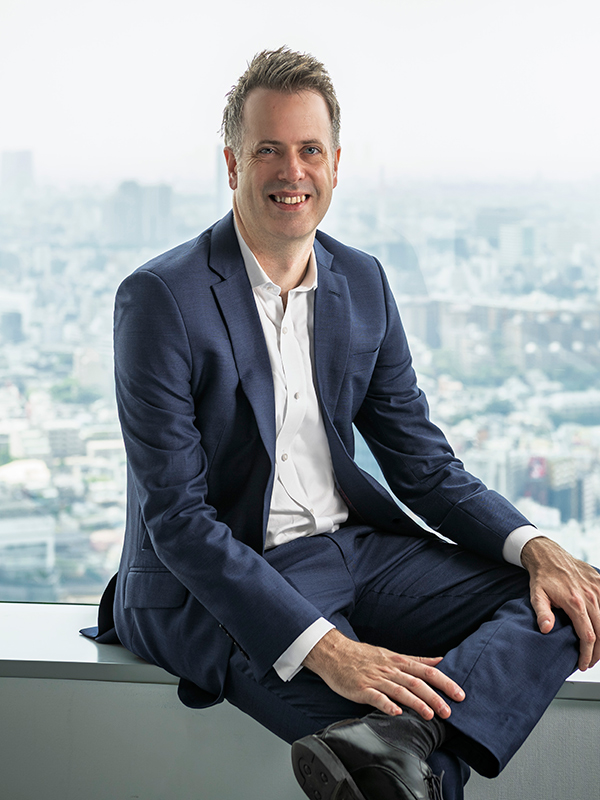
After a couple of years back in London, I returned to Tokyo. That time in London was also necessary in order to achieve a qualification as a gaikokuho jimu bengoshi, which basically allows foreign lawyers to practise in Japan.
I was sent for two years originally, but managed to extend it for one more year, then another year until finally Paula Hodges, who then headed the Arbitration group, said, ‘You’re not coming back, are you?’ That was very good of the firm.
I now have personal as well as professional reasons for being based in Japan. I have a Japanese wife and a five-year-old son. He is a train enthusiast, so quite a lot of my free time is spent with him admiring Japanese trains or going to train museums! I have got into cycling. I like to ride along the Tama River and there are some hills around – even in Tokyo – to do some climbing on the bike. Riding is a good way to switch off. When I was younger, I played a lot of cricket and, at one point, considered going professional, so maybe I will pick up a bat again at some point – although baseball is Japan’s number one sport so my son is more likely to be into that than cricket.”
Although real estate law has been a constant, across the years I’ve done everything and anything that is real estate-related at a number of different law firms and jurisdictions, including a stint doing real estate finance in London.
For many years, I worked on traditional real estate deals, such as commercial leasing and real estate developments, but more recently my focus has shifted to private capital transactions.
I began my career at Herbert Geer and Rundle (now Thompson Geer) in Melbourne (and assisted in the establishment of their Sydney office), after which I moved to what was then Blake Dawson Waldron (now Ashurst). I then spent a year in London with Denton Wilde Sapte (now Dentons) and on my return to Melbourne in 2007 joined what was then Freehills.
I worked in the Melbourne real estate practice with Freehills for four years. There, I worked with David Sinn and Jane Hodder.
Further moves happened when I joined Corrs – yes, I have worked for several firms! Returning from parental leave in 2014, I moved to Sydney with my young family on an internal secondment. I returned to the Melbourne office in 2015, but, moved back to Sydney permanently in 2018, shortly after being made a partner. The moves to Sydney whilst at Corrs, suited me professionally, because I started working more with Sydney-based private capital clients, and personally, by then having a family of two children who all loved being near the beach.
Andy Leadston
Private capital covers a broad range of investments into real estate as an asset class. It views real estate more as a financial product than traditional bricks and mortar. That can cover private equity, non-bank lenders, investment funds, real estate investment trusts and so on. I work for a range of clients, including AsheMorgan, Brookfield Properties, Centuria Capital, Cabot Properties, EQT Partners, ESR, Keppel and Synergis.
As a lawyer, I really enjoy this type of work: it is transactional, which I have always thrived on, it is complex with often bespoke structures, and it requires problem-solving, often in a pressure cooker environment.
That is in large part why I moved back to HSF, now HSF Kramer, in March 2025. Working for private capital is one of the firm’s core strategic objectives, so that fits very nicely with my practice. The moons aligned!
I had kept in touch with my colleagues from the Freehills days and would have lunch with them from time to time. So, it was a pretty easy process slipping back into the fold, even though, of course, there had been a merger with Herbert Smith in the meantime.
On my return, I have noticed the similarities are much more obvious than the differences. Those who I worked with as associates are now partners, so I am very comfortable partnering with them. As an employee, and even after I left, it stayed with me that this is a firm with a sense of caring for its staff and its partners. Happily, I can say that this is still the case.
It means a lot to be a partner here and that partners feel some kind of connection. That facilitates an openness and collaboration. People still have differences of opinion and all the rest of it, of course, but it definitely feels very much to me like being a partner is a collective here. It’s not just each individual out for themselves under some notional brand.
There are significant opportunities in our practice. Barely a week goes by without a PE fund saying they are setting up a pure real estate fund as part of their portfolio. Australia still benefits from being seen as a safe real estate investment, particularly in times of global volatility and uncertainty.

The big money is coming from offshore. I read recently that Japanese funds have invested A$6 billion into Australia real estate over the past two years, the same amount as they had invested over the previous two decades. We have also noted funds from Singapore (such as Keppel) and North American superannuation funds in particular are investing here. The way it typically may work is that a local company with day-to-day management experience takes on a management role for an overseas investor that’s supplying the vast majority of the funds. Having said that, while deal values are on the increase, deal volumes were down during the first half of 2025.
We are a two-partner practice in Sydney, with a strong team of associates, including one associate from my previous firm.
We are excited about the potential arising from the Kramer combination. There are clearly very many obvious benefits and opportunities to approach our US clients and other US businesses with an interest in Australia, and I have already witnessed the efficiency which having a US office can bring to truly global deals.
There are some obvious crossover of clients who we represent in Australia and now (through Kramers) in the US. There’s definite synergies and there’s alignment in terms of the client lists. What we now need to do is accurately pinpoint the best opportunities.
Outside of work, much of my time is a juggling act, to handle the activities of my two children, now aged 15 and 12. I try to stay active, mostly biking. But I also really love carpentry, making furniture and woodwork for our heritage sandstone cottage. I will shortly start building a small workshop, where I can indulge my hobby.
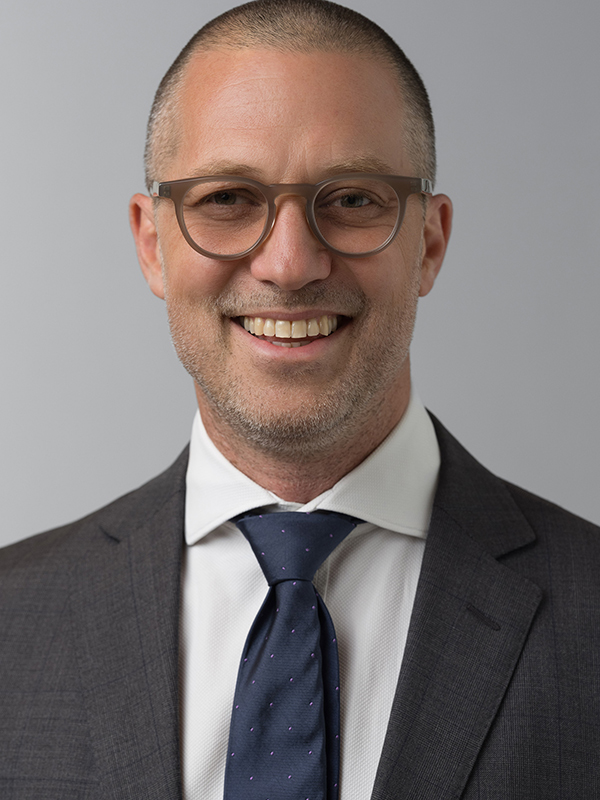
Carpentry is a wonderful pastime, helping me to relax but also – the problem solver in me! – offering scope for good execution.
Before an injury, I used to run, which I found very meditative. While running, I find you don’t totally zone out, but can plan things through in your head without kind of stressing or worrying about it. Carpentry has a similar sort of place, mentally. You can be focusing on the piece of timber in front of you or planning out how you’re going to build something and not consciously realise that, at the same time, you’re planning out things that you’re going to do that week. That is a great process.”
Transformative change: Shaping the future
Our Senior Alumni Ambassador shares his thoughts on the latest developments from the firm and alumni network
Reflections from Jonathan Scott of a career shaped by curiosity, courage and a touch of charisma
Maria Wang-Faulkner encourages everyone to capitalise enthusiastically on the potential while paying heed to the risks
Joshua Goldman and Hannah Lee are keeping calm in high-paced environments
Career milestones, unexpected lessons, Shein and ESG and what keeps him inspired
Lewis McDonald, co-head of the Herbert Smith Freehills Kramer Global Energy group, offers his thoughts on the energy trilemma
Mallika Mathur, Robin Carvell-Spedding, Mark Tudor and Matthew Warren unpack the three-way balancing act facing policymakers and industry leaders alike
Three alumni all now at the Asian Development Bank give fascinating insight into the social purpose of the bank
Justin D’Agostino, Rebecca Maslen-Stannage, Howard Spilko and Paul Schoeman recount how the combination came about
Ajneet Jassey and Jennifer Ewah are driven to ensure their organisations are operating responsibly
Former partners turned career NEDs explain how stepping back can offer the clarity needed to lead forward
Ean Brown shares his story of founding a start-up, the thrill of creating something from nothing, and overcoming the challenges of starting a business
Ben Jolley and Andy Leadston talk about their time away from Herbert Smith Freehills Kramer and what brought them back
Get your copy now
The contents of this publication are for reference purposes only and may not be current as at the date of accessing this publication. They do not constitute legal advice and should not be relied upon as such. Specific legal advice about your specific circumstances should always be sought separately before taking any action based on this publication.
© Herbert Smith Freehills Kramer 2026
Receive timely insights and briefings from HSF Kramer, tailored to keep you informed and ahead